Comparison
Ductless mini-split vs central AC: which fits your home?
For most Oxford County homes with existing ductwork, central AC is still the right answer in 2026 — lower install cost, single thermostat, even cooling. Ductless mini-splits win for homes without ductwork, additions, or genuine zoning needs.
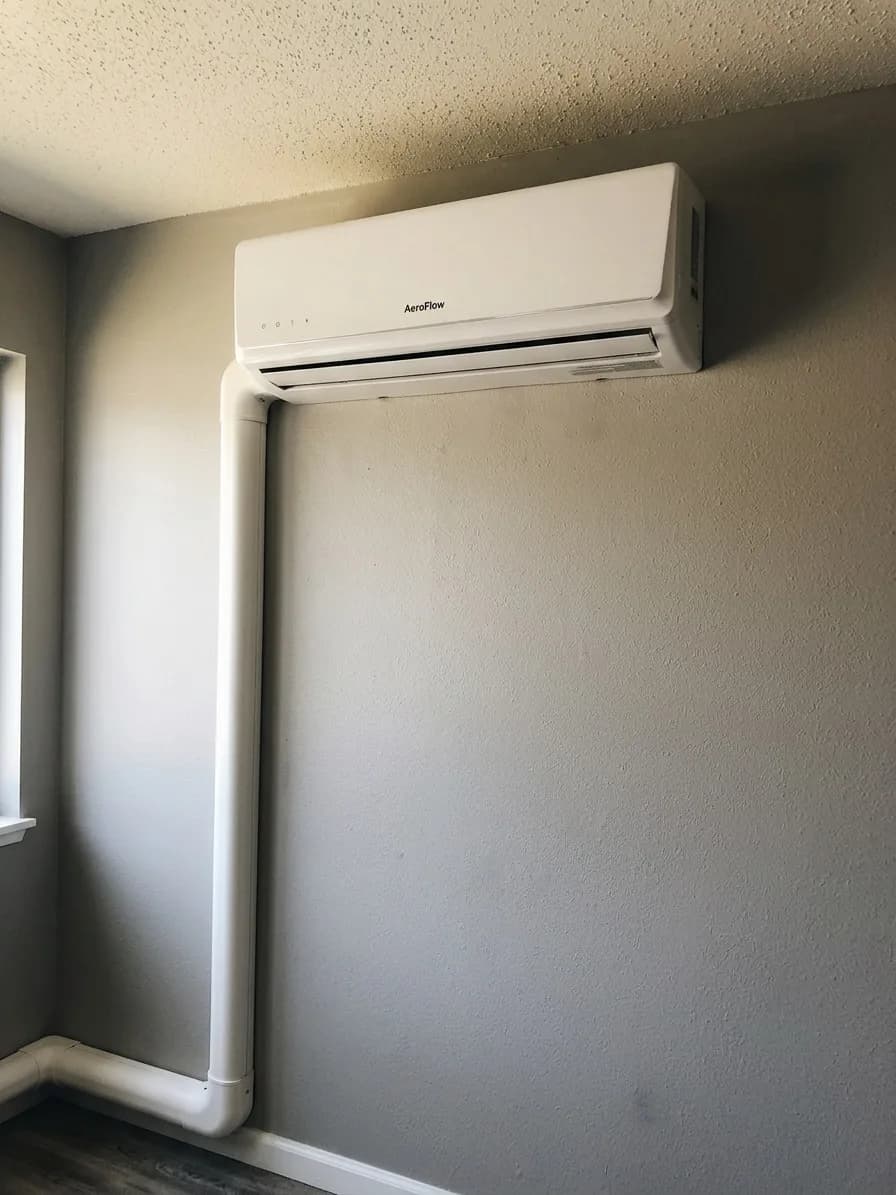
For most Oxford County homes with existing ductwork, a central AC is still the right answer in 2026 — lower install cost per ton, single thermostat, even whole-home cooling. Ductless mini-splits win when the home has no ductwork at all, when you need to cool an addition or finished basement that the main system can't reach, or when room-by-room zoning is genuinely important. The decision is mostly about ductwork and zoning needs, not about climate or efficiency. This guide walks through how each system actually works and the real decision for an Oxford County retrofit.
The short answer
| Situation | Best fit |
|---|---|
| Home has existing ductwork, replacing an old AC | Central AC |
| New home build with ductwork being installed | Central AC |
| Home has no ductwork (radiator heat, baseboard heat) | Ductless mini-split |
| Cooling an addition or finished basement that ducts can't reach | Ductless mini-split (single zone) |
| Garage / workshop / studio that needs heating + cooling | Ductless mini-split |
| Mixed need — main house has ducts, new room added without | Both (keep central, add mini-split for the new space) |
| Bedroom always too hot or cold despite working central system | Try balancing the central system first; mini-split as last resort |
For most Oxford County customers replacing an old central AC, the answer is "another central AC." Mini-splits are an excellent tool for the cases where ductless is the right answer — but they don't replace central AC for whole-home use in homes with existing ducts.
How central AC works (briefly)
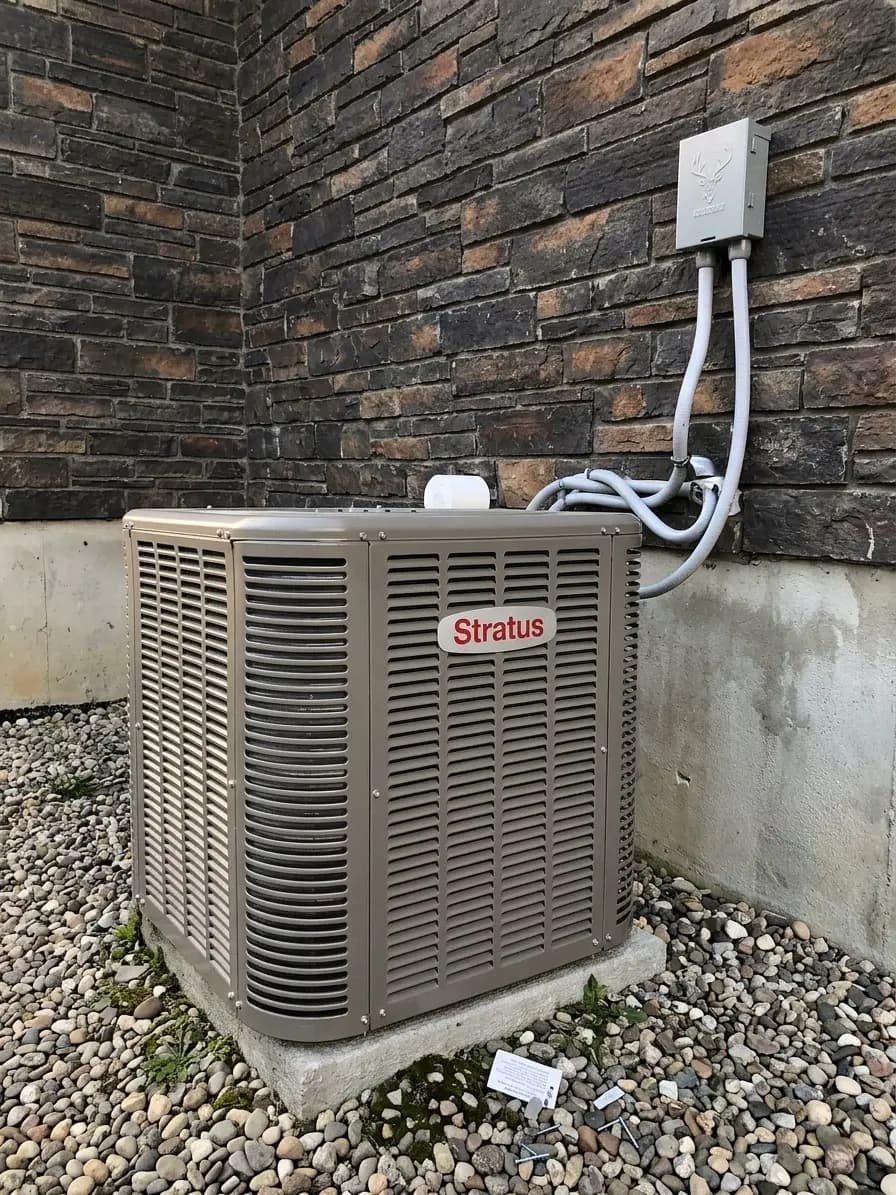
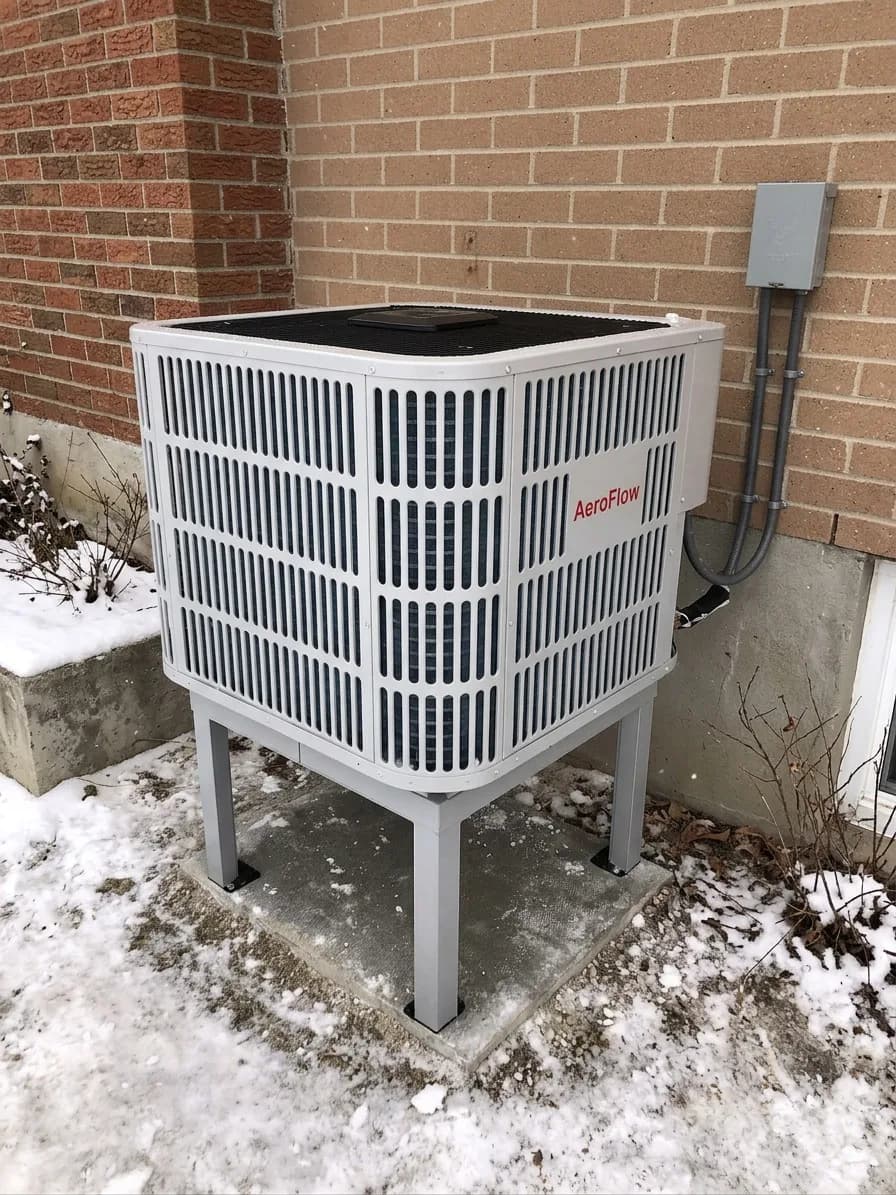
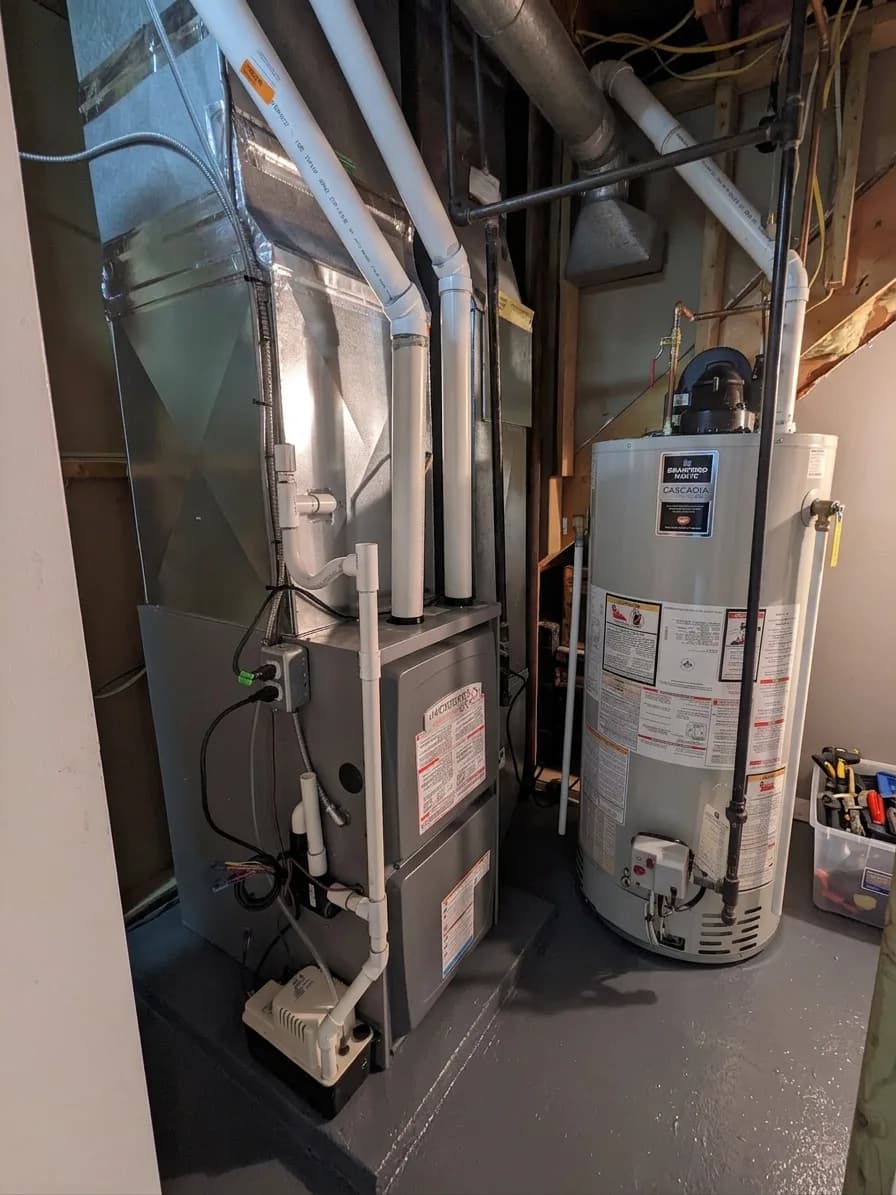
A central AC has two parts: an outdoor condenser unit (the big box outside), and an indoor air handler / evaporator coil (usually sitting on top of the furnace inside). The two are connected by refrigerant lines.
The system cools the air at the indoor coil, the furnace blower pushes that cold air through the ductwork to every room in the house, and warm return air comes back through the return duct to be cooled again. One thermostat controls the whole house.
Refrigerant moves heat from inside to outside. Outdoor condenser dumps the heat into the outside air. Indoor coil absorbs heat from the indoor air. The result is cool air in every room with ductwork.
How a ductless mini-split works
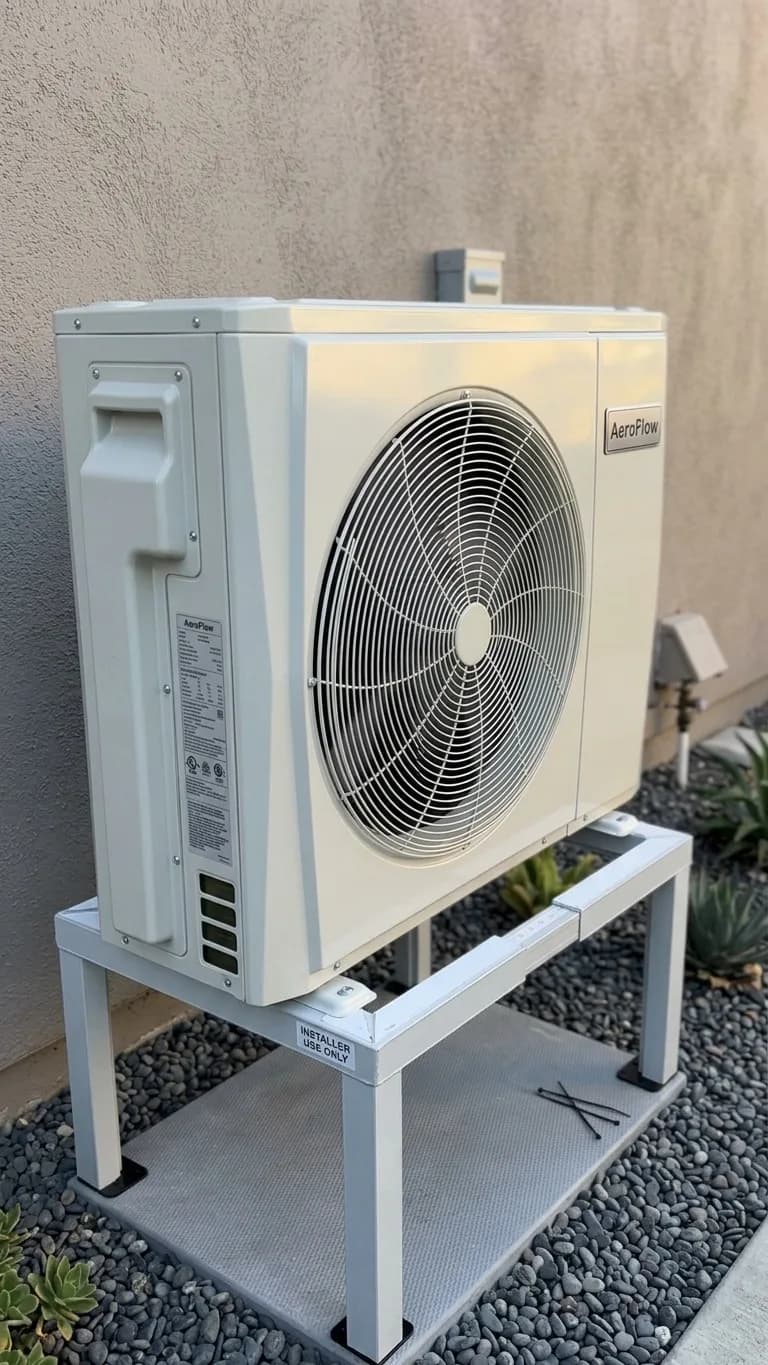
A ductless mini-split also has two parts: an outdoor condenser and an indoor unit. Same refrigerant principle. The difference is the indoor unit doesn't connect to ductwork — it's mounted directly on a wall (or ceiling) inside the room you want to cool, and blows conditioned air directly into that room.
Each indoor unit has its own thermostat and operates independently. A single-zone mini-split has one indoor unit. A multi-zone mini-split has 2-8 indoor units sharing one outdoor condenser, each with its own thermostat.
Most modern mini-splits are reversible — they cool in summer and heat in winter (in cold-climate models, down to about -25°C). Many home installations use them as both summer AC and winter supplemental heat.
Install cost — what to expect
Rough Oxford County install ranges for typical scenarios:
| Scenario | Typical installed cost |
|---|---|
| Central AC replacement (2-3 ton, like-for-like swap with intact ductwork) | $4,500–$8,000 |
| Central AC new install with existing ductwork | $5,500–$9,000 |
| Single-zone mini-split (1 indoor head, simple install) | $4,000–$6,500 |
| 2-zone mini-split (2 indoor heads) | $7,000–$11,000 |
| 3-zone mini-split (3 indoor heads) | $10,000–$15,000 |
| 4+ zone whole-home mini-split (each room its own head) | $15,000–$28,000+ |
A whole-home mini-split system with 4-5 zones costs significantly more than a central AC covering the same square footage. That math drives most of the decision for homes that have ductwork.
The mini-split math reverses for homes without ductwork — adding ductwork to retrofit central AC into a home that was built with radiator heat is a $10,000-$25,000 project of its own. In that case the mini-split is the lower-cost path.
When central AC wins
For most Oxford County homes built between 1970 and 2020 with forced-air heating, central AC is the right choice:
Lower cost per ton
A 2-ton central AC at $5,500 covers the entire house. A multi-zone mini-split with the same effective capacity (3-4 indoor heads) runs $10,000-$15,000. The mini-split costs roughly 2× per ton of cooling for whole-home use.
Single thermostat, single set of controls
Most people don't want to manage 5 thermostats — one per room. They want to set the house to 22°C and have every room be 22°C.
Already-installed ductwork
If the home has ducts, central AC uses them. Mini-splits don't use the existing ducts (which means the ducts sit unused in summer, and you've paid for parallel infrastructure).
Easier to filter the whole house
Central AC uses a single high-efficiency filter at the air handler, capturing dust, pollen, and allergens for the whole home. Mini-splits have small filters per indoor unit that need cleaning more often and don't capture as effectively at the whole-home scale.
Better humidity control
A properly-sized central AC cycling through the whole home does a better job of pulling humidity out of the air than multiple smaller mini-splits running in their own zones. Humidity is a whole-home phenomenon.
Aesthetics
Indoor mini-split heads are visible on walls — typically a 30" × 12" plastic box mounted high. Some people find them unobtrusive; others find them ugly. Central AC's indoor unit is hidden in the basement / utility room.
Resale value
In a market where most homes have central AC, a home with a mini-split system reads as "no real AC" to some buyers, even though the mini-split might cool more effectively than the central system next door. Central AC is the buyer expectation in Oxford County in 2026.
When ductless mini-splits win
Mini-splits are the right tool when central AC isn't practical or isn't enough:
Homes without ductwork
Radiator-heated homes, baseboard-heated homes, and many older century homes have no ductwork. Adding ductwork is expensive — $10,000-$25,000 for retrofitting a typical home. Mini-splits go in for less.
Additions, finished basements, garage spaces
A finished basement that wasn't ducted, an addition built without extending the central system, a converted garage workshop — all of these are spaces the central system can't cool. A single-zone mini-split is often the simplest answer at $4,000-$6,500.
Spaces with significantly different cooling needs
A home office with a south-facing wall full of windows and three computers running heats up much faster than the rest of the house. A central system can't prioritize that one room without overcooling everything else. A mini-split with its own thermostat handles the imbalance.
When zoning matters genuinely
A multi-generational household where grandparents want 24°C and teenagers want 19°C. A home where the upstairs is always 4°C warmer than the downstairs. A home with a bedroom over the garage that can never get cool enough. These are real cases where per-room control is worth the cost.
Spot cooling for problem rooms
A single sunroom that overheats in summer. A converted attic bedroom. A small detached studio. Single-zone mini-splits solve these well without touching the rest of the home's HVAC.
Pairing with heat pump heating
Cold-climate mini-splits work as efficient supplemental heat in winter. For homes considering a hybrid heat pump setup, a mini-split heat pump in the most-used rooms can complement a central furnace.
When you might want both
Some homes benefit from a hybrid approach:
- Central AC handles the main house + single mini-split for the addition or finished basement
- Central AC handles whole-home base cooling + single mini-split in a problem room (master bedroom over garage, sunroom)
- Older central AC kept running + mini-split installed in the master suite for nighttime zoning — letting one zone run cool while the rest of the house drops back
Adding a single-zone mini-split to an existing central AC isn't expensive — $4,000-$6,500 for the additional unit. For specific problem rooms, this can be more cost-effective than upgrading the entire central system.
Efficiency comparison
Both modern central AC and modern mini-splits hit 16-21 SEER2 in mid-to-premium tiers. Mini-splits often have a slight efficiency edge on paper:
- Inverter-driven variable-speed compressors are standard in mini-splits (still optional in central AC)
- No duct losses (central AC loses 10-20% of efficiency through duct leakage in some homes)
- Per-room operation lets you not cool unused rooms
Real-world efficiency depends on usage patterns, duct quality, and how the systems are sized. For a home where you're only using 30% of the rooms most of the day, mini-splits can reduce electricity use by zoning. For a home where everyone uses the whole house, the duct-loss advantage of mini-splits is the main factor — and a well-sealed duct system narrows the gap.
In Oxford County electricity rates, the real-world annual cost difference between a properly-sized central AC and a comparable mini-split is usually under $200/year — not enough to drive the decision.
Heating mode — the mini-split advantage
Most modern mini-splits are heat pumps that work in both directions. In winter, they pull heat from outside air into the home. This is the area where mini-splits offer real value beyond cooling:
- Spaces without forced-air heat (additions, garages, finished basements) get efficient supplemental heat
- Per-room temperature control lets bedrooms run cooler than living spaces overnight
- Cold-climate mini-splits maintain effective heating down to -25°C, matching central heat pump performance
- Heat pump rebates apply to mini-splits the same way they apply to central heat pumps — see our Ontario heat pump rebate guide and heat pump cost guide
A central AC doesn't heat. A central heat pump heats and cools, but requires ductwork. A ductless mini-split heat pump heats and cools without ductwork — which is why it's such a common choice for additions or homes without central HVAC.
Common myths
A few claims about mini-splits and central AC that aren't quite right:
"Mini-splits are way more efficient"
On paper, slightly. In real-world whole-home use with quality ductwork, the difference is small. Per-room zoning can save energy if usage is uneven; whole-home use of mini-splits doesn't save much over central.
"Central AC can't cool an upstairs that's always too hot"
Sometimes true, sometimes not. Many "upstairs too hot" complaints are actually duct balancing issues that can be fixed cheaply with damper adjustments, return register additions, or supply register changes. Try balancing first. Mini-splits as a fix should be the last resort, not the first.
"Mini-splits look bad in living spaces"
Subjective. The 30" × 12" wall units are visible but typically white and unobtrusive. Concealed-ceiling cassette and slim-duct designs hide most of the unit; these cost more.
"You don't need a tech for mini-split installs"
Wrong. Mini-splits use sealed refrigerant systems that require proper line-set vacuum, refrigerant charge, and electrical wiring. DIY installs void warranties and create real safety issues. Quality mini-splits are tech-installed.
"Mini-splits work great for basements"
Yes for finished living spaces. Less great for unfinished utility basements where humidity control is the goal (a dehumidifier might be the better tool).
"One outdoor unit can support 8 indoor heads no problem"
Possible, but the design pencils out differently than a simpler 2-3 zone setup. Big multi-zone systems are more complex, more expensive, and more failure-prone over 15 years.
What we'll ask at the quote
When we come out to talk about a central AC vs mini-split decision, the conversation goes:
- Does the home have existing ductwork? Drives the decision more than anything else.
- What's your goal — whole-home cooling, room-specific, or addition?
- How old is the existing AC if there is one? What's the refrigerant? (R-22 vs R-410A drives replacement urgency — see our AC repair-or-replace guide)
- Are there problem rooms — chronically hot, chronically cold?
- Are you also looking at heating efficiency upgrades? (Heat pump conversion conversations often start as AC replacement conversations)
- What's the budget?
The answers usually point clearly to one option. Some homes get both — central for the main house, mini-split for the addition.
Maintenance differences
Both systems need annual servicing, but the patterns differ:
Central AC maintenance (annual):
- Outdoor coil cleaning
- Indoor coil inspection
- Filter change (homeowner: every 1-3 months)
- Refrigerant pressure check
- Electrical inspection
- Drain line clearing
Mini-split maintenance (annual + more frequent indoor cleaning):
- Outdoor unit cleaning
- Indoor unit cleaning per head (filters need rinsing every 2-4 weeks during heavy use, not just every 1-3 months — they're smaller and reach saturation faster)
- Indoor blower wheel cleaning (mini-splits develop visible mold in the blower wheel if not cleaned annually)
- Refrigerant pressure check
- Electrical inspection
- Drain line clearing per indoor unit
The mini-split indoor filter is small and clogs quickly compared to the large central air filter — homeowners with mini-splits need to be more attentive to weekly filter cleaning. The blower wheel cleaning is a real factor — neglected mini-splits develop musty smells over 5-10 years.
Lifespan
- Central AC: 12-18 years typical
- Mini-split: 12-18 years typical (similar, despite some marketing claims of longer lifespan)
Both depend heavily on installation quality and maintenance. Both have outdoor units that take weather and indoor units that need cleaning.
Common questions
Can I add mini-splits to a house that already has central AC?
Yes — they're completely independent systems. The mini-split has its own refrigerant lines, its own outdoor unit, its own electrical. Adding a single-zone mini-split to an existing central AC system is a common upgrade for problem rooms.
Are mini-splits noisier?
Indoor units are quieter than central AC indoor units in normal operation (they don't need a large blower pushing air through ducts). Outdoor units are similar in noise to a central condenser. Most mini-split installs are quieter overall than central.
What about heating? Can mini-splits replace a furnace?
Cold-climate mini-splits work as effective heaters down to about -25°C. For a home without forced-air heat, a properly-sized multi-zone mini-split system can replace the heating system entirely. For homes with existing furnaces, mini-splits are usually used as supplemental zoned heat. See our heat pump vs furnace for Oxford County winters guide.
Will a mini-split work in my poorly-insulated old farmhouse?
It'll cool the room it's in. It won't cool the rest of the house (single-zone). For whole-home cooling of an older drafty house, the actual answer is usually "do the air-sealing and insulation first, then size the cooling system to the post-retrofit load." See our AC sizing guide.
Are mini-splits good for finished basements?
For comfort cooling, yes. For humidity-control-as-primary-goal (cool dry basement that's otherwise damp), a dedicated dehumidifier often works better. Mini-splits do remove some humidity but aren't dehumidifiers.
What about smart-home integration?
Modern mini-splits integrate with Wi-Fi controls, Alexa, Google Home, and similar smart-home systems. Central AC + smart thermostat (Nest, Ecobee) has the same level of integration. Smart-home compatibility isn't a differentiator.
Can a mini-split handle a whole 2-storey home?
Technically yes with enough indoor heads. Economically usually no — a 5-zone mini-split for a 2,400 sq ft 2-storey home costs more than central AC + furnace + heat pump conversion at current prices. Unless ductwork is impossible, central typically wins.
Ready to talk about the right cooling setup for your home?
We'll come out, assess your home's ductwork (or lack thereof), problem rooms, budget, and goals, and quote the option that actually fits. No bias toward one technology — we install whichever is right for your home.
Request a quote or read more on ductless mini-split installation, AC installation, and the broader heat pump vs furnace decision. Service area: Woodstock + 30-minute radius covering Ingersoll, Tillsonburg, Tavistock, Norwich, Embro, Innerkip, Thamesford, Beachville, Salford, Mount Elgin, Burgessville, and Plattsville.
Common Questions
Frequently asked
Is a mini-split better than central AC?
Depends on the home. For homes with existing ductwork, central AC is usually the right answer — lower cost per ton, single thermostat, even whole-home cooling. Mini-splits win when the home has no ductwork (radiator heat, baseboard heat), when cooling an addition or finished basement that the main system can't reach, or when genuine room-by-room zoning is important.
How much does a ductless mini-split cost vs central AC?
A single-zone mini-split runs $4,000-$6,500 installed for one indoor head. A central AC replacement (2-3 ton, like-for-like swap) runs $4,500-$8,000. A multi-zone mini-split (3-4 zones for whole-home use) runs $10,000-$15,000 — roughly 2× per ton compared to central AC for whole-home coverage.
Can I add mini-splits to a house that already has central AC?
Yes — they're independent systems. The mini-split has its own refrigerant lines, outdoor unit, and electrical. Adding a single-zone mini-split to an existing central AC system is common for problem rooms (master bedroom over the garage, sunroom, finished basement). Typical cost is $4,000-$6,500 for the additional zone.
Are mini-splits more efficient than central AC?
Slightly, on paper. Both modern central AC and modern mini-splits hit 16-21 SEER2 in mid-to-premium tiers. Mini-splits have inverter-driven variable-speed compressors standard (still optional on central) and no duct losses. In real-world whole-home use with quality ductwork, the efficiency difference is small. Per-room zoning can save energy if room usage is uneven.
Do mini-splits heat as well as they cool?
Cold-climate mini-splits work as effective heat pumps down to about -25°C. For homes with existing forced-air heat, mini-splits typically supplement specific rooms rather than replacing the whole system. For homes without ductwork, properly-sized multi-zone mini-splits can replace the heating system entirely. See our heat pump vs furnace guide for the broader decision.
What about the indoor mini-split units? Are they ugly?
Subjective. Standard wall-mounted indoor units are 30 by 12 inches, mounted high on a wall, typically white. Most homeowners find them unobtrusive once installed. For homes where appearance matters more, concealed-ceiling cassette and slim-duct designs hide most of the unit at additional cost. The trade-off between visible mini-splits and the cost of central retrofitting is part of the decision.