Comparison
Heat pump vs furnace for Oxford County winters: which makes sense?
For most Oxford County homes in 2026, the right answer is both — a cold-climate heat pump as primary, a high-efficiency gas furnace as backup. We walk through the actual decision with the trade-offs spelled out.
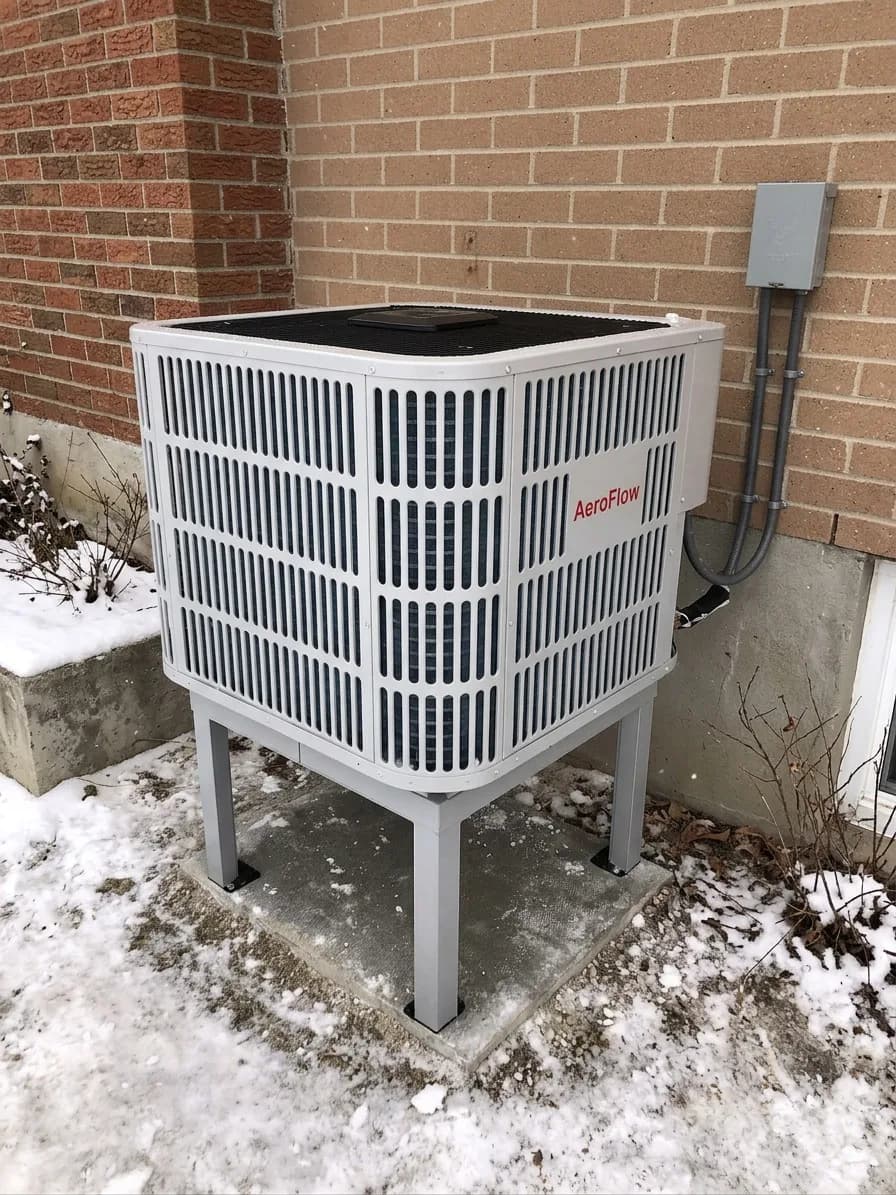
For most Oxford County homes in 2026, the right answer is "both" — a cold-climate heat pump as the primary heat source, with a high-efficiency gas furnace as backup for the coldest nights. Pure heat-pump systems work for some homes; pure furnace systems are still common; but the hybrid setup gets the best of both — lower energy bills most of the year, full heat capacity when it drops below -25°C.
This guide walks through the actual decision for an Oxford County home, with the trade-offs spelled out.
The short answer
| Setup | Best for | Operating cost vs old furnace |
|---|---|---|
| Furnace only | Smaller homes, simpler installs, no electrical upgrade headroom | Same to slightly better |
| Hybrid (heat pump + furnace) | Most Oxford County homes | 30-50% lower heating bill |
| Heat pump only (cold-climate) | Well-insulated homes, electric-only properties, climate-priority buyers | 40-60% lower vs old gas furnace, but higher than hybrid in cold snaps |
The hybrid setup is what we install most often for Oxford County homes built before 2010. Newer well-insulated builds can do heat-pump-only.
How a heat pump actually works (briefly)
A heat pump is air conditioning that runs in reverse. In summer it pulls heat out of your house and dumps it outside (regular AC). In winter, the same unit reverses — it pulls heat out of the outside air (yes, even at -20°C, there's still heat in the air relative to absolute zero) and moves it inside.
Because it moves heat rather than generating it, a heat pump can deliver 2-3 units of heat for every 1 unit of electricity it consumes. That's why operating costs are dramatically lower than gas furnaces or resistance electric heating.
The catch: as outside temperature drops, the heat pump's efficiency drops too. Below about -25°C, most cold-climate heat pumps can't produce enough heat on their own.
Cold-climate heat pumps in Oxford County
Cold-climate heat pumps (CCHP) are the relevant category for Ontario winters. Standard heat pumps (the kind you'd find in Vancouver or Toronto) start losing capacity around -7°C; cold-climate models hold up to about -25°C.
For Oxford County, where we hit -18°C design temperature and occasionally see -25°C overnight in January or February, you need either:
- A cold-climate heat pump sized for your home with backup heat for the coldest nights (hybrid)
- An oversized cold-climate heat pump that can carry the load alone (pure heat-pump, more expensive equipment)
We almost always recommend option 1 for retrofits. New builds with very tight envelopes can do option 2.
Operating cost reality
A rough comparison for a typical 2,000 sq ft Woodstock home over a heating season:
| Heating setup | Annual heating cost |
|---|---|
| Old 80% furnace on natural gas | $1,800–$2,400 |
| New 96% furnace on natural gas | $1,400–$1,800 |
| Heat pump only (electric, mid-tier rates) | $1,200–$1,600 |
| Hybrid heat pump + 96% furnace | $1,000–$1,400 |
These are rough numbers — your actual cost depends on the size and insulation of your home, current gas vs electricity rates, and how the system is set up. The hybrid wins on a typical Oxford County home because it runs the heat pump for the 85-90% of heating hours when it's most efficient, and only fires the furnace during the coldest 10-15% of hours when gas is cheaper per BTU.
When a furnace-only setup still makes sense
- Small homes (< 1,000 sq ft) where the marginal heat-pump savings don't justify the higher install cost
- Homes without 200A electrical service where upgrading the panel adds $2,500–$4,500 to the project
- Properties without natural gas where electric heat would be the alternative — usually a heat pump still wins here, but propane furnaces are another option
- When the existing furnace is mid-life and replacement isn't financially due yet — adding a heat pump as a retrofit can wait
In most other cases, the hybrid is the better long-term play. The math has shifted significantly in the last 3-4 years as cold-climate heat pump technology has matured and rebates have expanded.
When heat-pump-only makes sense
- Well-insulated newer builds (post-2015) with tight envelopes
- All-electric properties without natural gas at the curb
- Homeowners prioritizing carbon reduction who want to eliminate gas
- Properties with solar panels to offset the electricity draw
The trade-off is that you need oversized heat-pump equipment to handle the coldest nights without backup. That's more expensive equipment upfront and less common in Ontario right now.
Trade-offs spelled out
Upfront cost
| Setup | Typical installed cost |
|---|---|
| New 96% gas furnace + new AC | $9,000–$13,000 |
| Hybrid heat pump + 96% backup furnace | $14,000–$20,000 |
| Cold-climate heat pump only | $13,000–$18,000 |
After rebates, the hybrid often lands close to the pure-furnace number. See the rebates page for current eligibility and our heat pump rebate guide for the stacking math.
Comfort
- Furnace delivers hot air ("blast of heat"). Easy to feel.
- Heat pump delivers warm air (cooler than a furnace's output, but on for longer). More consistent room temperature, less "kick on, kick off" cycling.
People who switch from furnaces sometimes describe heat pump air as "not warm enough" the first winter. This is mostly an adjustment to a different style of heating; the room temperature is actually more even. Setting the thermostat 1°C higher than you used to can help during the transition.
Maintenance
- Furnace: annual tune-up, filter change every 1-3 months. Roughly $200/year in maintenance.
- Heat pump: similar tune-up cadence, outdoor unit needs occasional cleaning of debris. Roughly $250/year in maintenance.
Lifespan
- Furnace: 15-20 years typical
- Heat pump: 12-18 years typical (the outdoor unit takes weather)
Reliability in Oxford County winters
Modern cold-climate heat pumps are reliable down to -25°C. Below that, you're running on the backup furnace. The hybrid setup means you're never without heat — if the heat pump has a fault, the furnace takes over until we can come fix it.
Replacing AC at the same time?
If your AC is over 10 years old and your furnace is also due, a heat pump replaces both in one box. The cost premium of a heat pump over a comparable AC is small once you account for rebates — and the heat pump delivers the heating savings on top.
We'll quote both ways at the visit so you can see the numbers side by side.
How we approach this at the quote
We don't push heat pumps. We don't push furnaces. We:
- Look at your existing system — what's installed, how old, what state
- Check your electrical panel — can it handle a heat pump without an upgrade?
- Run heat-load math for your specific home
- Check current rebate eligibility
- Quote you two or three options (typical: hybrid, furnace-only, heat-pump-only where it fits) with the after-rebate cost spelled out
- Let you decide
The honest call for most Oxford County homes built between 1980 and 2010 is the hybrid setup. Newer high-performance homes can do heat-pump-only. Older homes with limited electrical might be furnace-only for now.
Common questions
Can I get a heat pump if I have a 100A electrical panel?
Sometimes yes, sometimes no. Most cold-climate heat pumps need 30-50A of dedicated circuit capacity. If your panel is fully loaded already, you'll need a 200A upgrade ($2,500–$4,500). We check this at the quote.
Does a heat pump work in a power outage?
Same as a furnace — they both need electricity to run the blower, controls, and (for the furnace) ignition. Neither runs without power. If you want guaranteed heat in a long outage, a small generator is the answer regardless of which system you have.
Will my house feel cold with a heat pump?
If sized right, no. People sometimes report that the air coming out feels less hot — that's because heat pumps run longer at a lower output rather than blasting briefly at high output. The room temperature is actually more even.
What about ground-source / geothermal?
Geothermal is more efficient than air-source and works at any outdoor temperature, but the install cost is 3-4× higher because of the ground loop. For most Oxford County homes the air-source cold-climate option is the better return on investment in 2026.
What size heat pump do I need?
Same answer as furnace sizing — Manual J heat-load calculation, not square-footage rules. Oversized heat pumps short-cycle and run inefficiently; undersized ones can't keep up.
Ready to see the numbers for your home?
We come out, look at your home, do the heat-load math, and quote two or three options with after-rebate pricing. No equipment recommendation written before we've seen your space.
Request a quote or learn more about heat pump installation and our furnace services. Serving Woodstock, Ingersoll, Tillsonburg, and the 30-minute service radius.
Common Questions
Frequently asked
Do heat pumps actually work in Ontario winters?
Yes, with the right equipment. Modern cold-climate heat pumps maintain effective heating down to about -25°C. Below that, a backup gas furnace takes over in a hybrid setup. For most Oxford County homes the heat pump handles 85-90% of heating hours each year.
Is a hybrid heat pump + furnace cheaper to run than gas alone?
For typical Oxford County homes, yes — usually 30-50% lower heating bills versus an older gas-only setup. The heat pump handles the milder heating hours efficiently (2-3× more efficient than gas), and the furnace only kicks in during the coldest stretches where gas-per-BTU is cheaper.
How much does a hybrid heat pump system cost vs a furnace + AC?
Before rebates: hybrid heat pump + backup furnace typically $14,000–$20,000 installed. New 96% furnace + new AC typically $9,000–$13,000 installed. After current Ontario rebates ($5K–$10K off the heat pump option), the after-rebate gap is often small or even reversed.
Will a heat pump heat my house as well as a furnace?
If sized right, yes. The air coming out is cooler than a furnace's blast — heat pumps run longer at lower output for more even temperature. People sometimes find this 'less warm-feeling' initially; setting the thermostat 1°C higher than you used to can help during the adjustment period.
Can my electrical panel handle a heat pump?
Most cold-climate heat pumps need 30-50A of dedicated circuit capacity. If your panel is 100A and fully loaded, you'll likely need a 200A upgrade ($2,500–$4,500). We check this at the quote so the panel work is factored into the pricing.
Do I need to upgrade my furnace too if I add a heat pump?
Depends on the age of your existing furnace and how you want the system to run. A hybrid heat pump + your existing 10-year-old furnace can work fine. If your furnace is at end-of-life anyway, replacing both in one project saves install labour and lets us tune the systems together.