Maintenance
Pre-winter furnace checklist for Oxford County homeowners (October-November)
A 10-step homeowner pre-winter checklist for Oxford County — done in October it catches 70% of the issues that would otherwise turn into January no-heat calls. Replace the filter, test the thermostat, clear the venting, check detectors, book a tune-up. Plus what the professional tune-up adds.
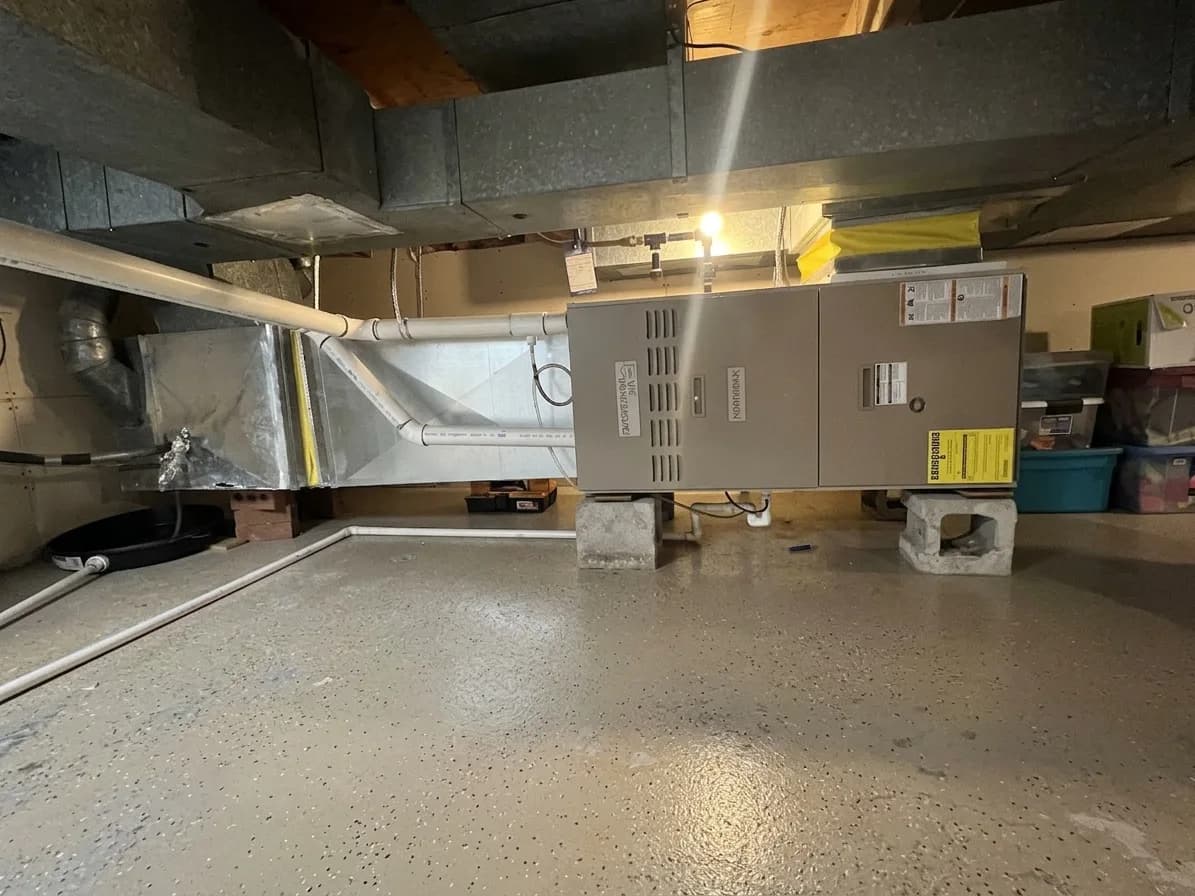
The best window for pre-winter furnace prep in Oxford County is late September through mid-November. Working through a 10-step homeowner checklist — replace the filter, test the thermostat, clear the venting, inspect for visible damage, test CO + smoke detectors, schedule a professional tune-up, check the humidifier pad, clear furniture from registers, test the ignition, and book your annual tune-up window — catches most of the issues that turn into January no-heat emergencies. About 70% of the no-heat calls we run in deep January would have been caught at a fall tune-up. This guide walks through what you can do this weekend before booking the pro visit.
If it's currently October or early November and you haven't touched your furnace since last spring, this is the checklist. Most steps take under 5 minutes. The whole list runs about an hour. The annual tune-up that follows is the professional part — see furnace tune-up cost in Ontario for what should happen at that visit and what fair pricing looks like.
Why timing matters
Three reasons to do this before mid-November:
- Tune-up scheduling fills up. HVAC companies in Oxford County book solid from mid-November through January. Calling in October gets you a spot at convenient times; calling in late December is an emergency-only conversation.
- Catching failures before deep cold matters. A flame sensor that's 80% gone in October becomes 100% failed in January when temperatures hit -20°C and the furnace runs hardest. Early catch = comfortable repair window; late catch = emergency no-heat call.
- Outdoor work needs to happen before snow. Some of the steps (vent inspection, outdoor unit prep if you have AC or a heat pump) are much easier without snow on the ground.
The 10-step pre-winter checklist
1. Replace the filter
A new filter is the single most impactful thing a homeowner can do for furnace health. A heavily-loaded filter is the #1 cause of furnace short-cycling and roughly 30-40% of "no heat" calls in early winter.
What to do:
- Pull the current filter — it's in the cold-air return slot near the furnace or inside the furnace door
- Hold it up to a light; if you can't see clearly through it, replace
- Write down the dimensions (printed on the frame)
- Buy a new one matching the dimensions — any hardware store carries common sizes
- Note the airflow arrow on the new filter; it should point toward the furnace
Which MERV rating? For most Oxford County homes, MERV 8 or MERV 11 is the right choice. MERV 13 needs a furnace specifically engineered for it — see our MERV filter ratings explained for the longer conversation.
Set a reminder: mark your calendar to check the filter again every 60-90 days through winter. Heavy heating season loads the filter faster than summer.
2. Test the thermostat
A working thermostat is the foundation of the heating season. Test it before the first cold snap, not during it.
What to do:
- Set the thermostat to HEAT mode
- Set the temperature 3°C above the current room temperature
- Listen for the furnace to start within 30-60 seconds
- Confirm warm air actually comes out of the vents
- Check the thermostat's battery indicator (if applicable) — replace batteries if low
If the thermostat doesn't fire the furnace, see our furnace not heating checklist for the broader diagnostic flow.
If you've been meaning to upgrade to a smart thermostat, this is the right time — see our smart thermostat buying guide for the Nest vs Ecobee vs Honeywell comparison.
3. Clear the venting (high-efficiency furnaces only)
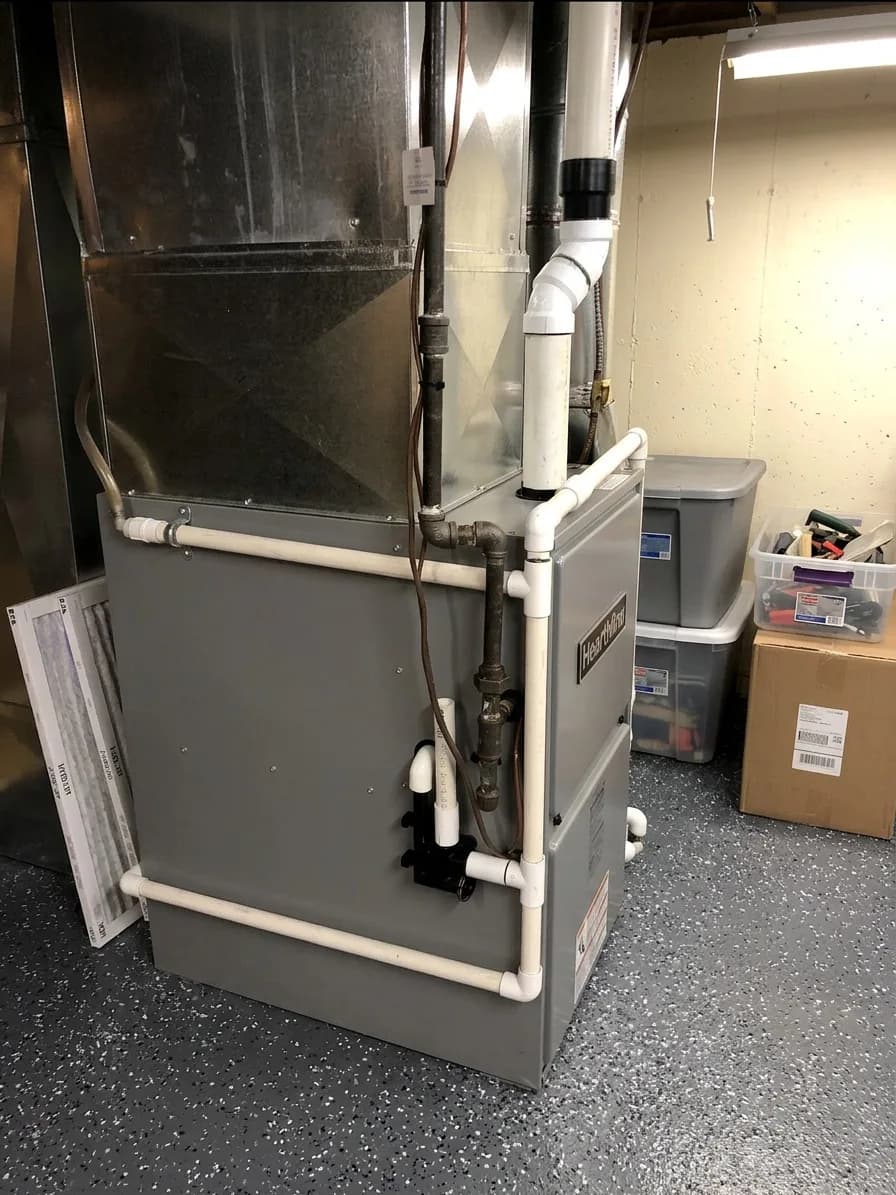
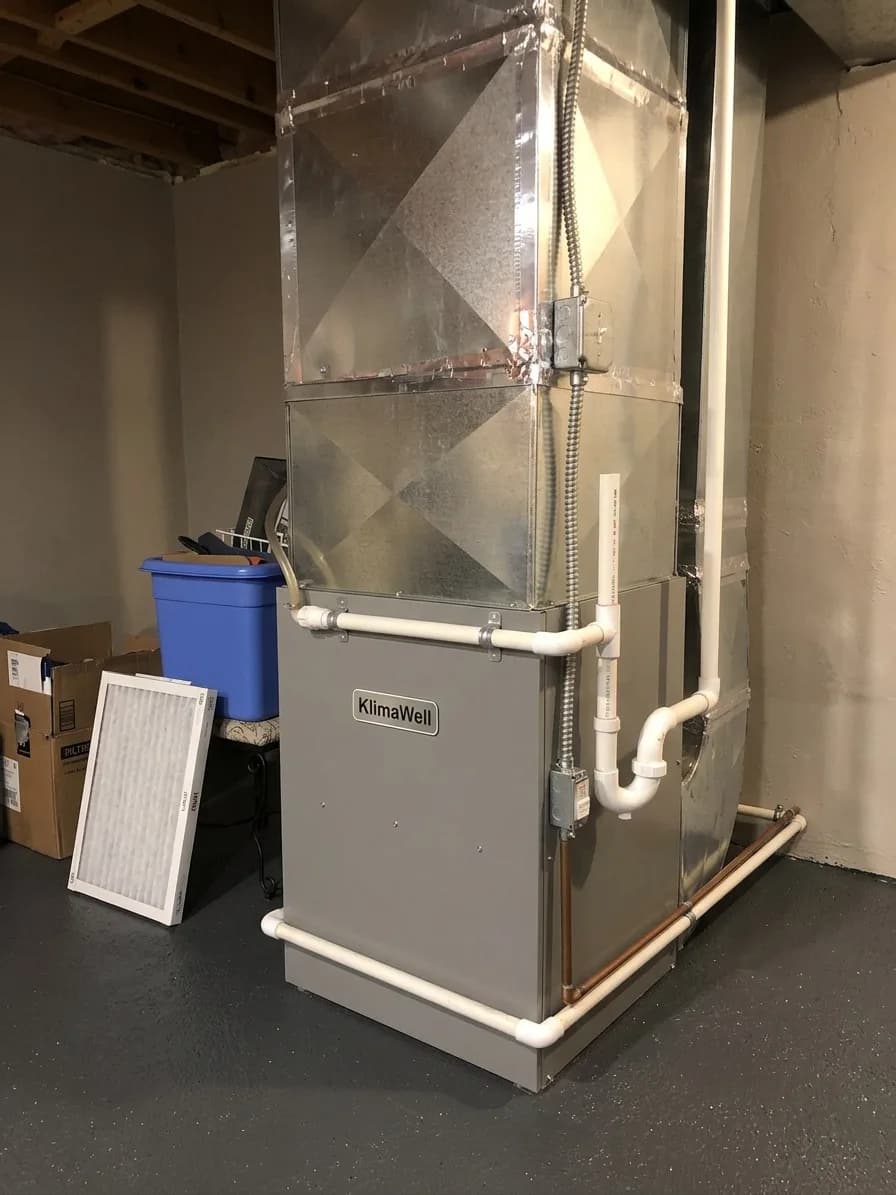
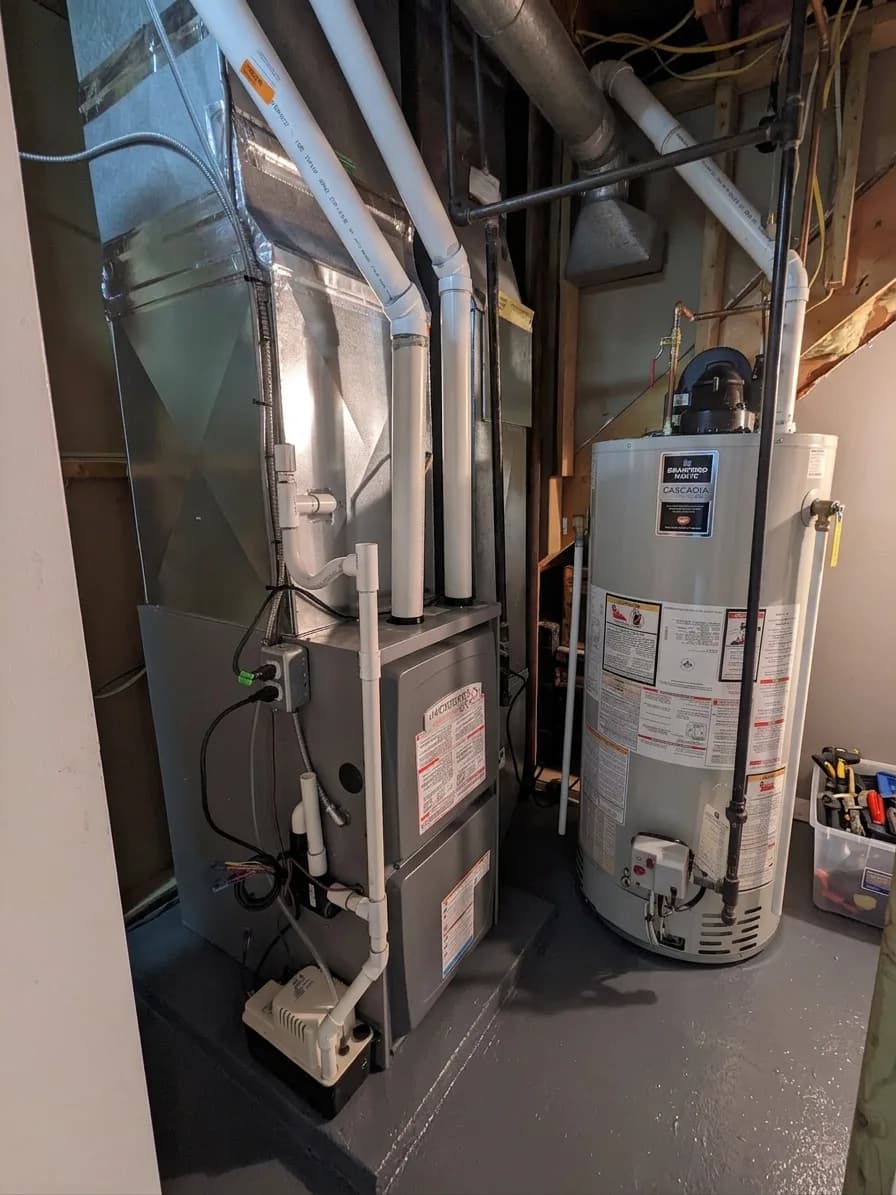
If your furnace is high-efficiency (96%+ AFUE — most furnaces from the last 20 years), it vents through PVC pipes that terminate on an exterior wall. These pipes need clear access through the winter to prevent safety lockouts.
What to do:
- Walk around the house and find the white PVC pipes (usually two pipes — intake and exhaust)
- Clear at least 12 inches of space around the openings
- Trim back any shrubs or vegetation that have grown close over the summer
- Look up: are gutters above the vents blocked or likely to drop ice formations onto the vent area? Clear them
- Make a mental note: when it snows, you'll need to keep this area clear
A blocked vent triggers a safety lockout. The furnace stops heating until the vent is clear and the pressure switch resets.
4. Inspect for visible damage
A 60-second visual inspection of the furnace and surrounding equipment catches some of the early-warning issues.
What to do:
- Look at the furnace itself — any visible rust, oil staining, or scorch marks?
- Look at the venting — is the PVC still intact or are there cracks or separations?
- Look at the condensate drain — is the clear plastic tube intact or are there visible cracks?
- Look at the gas line — any obvious damage or disconnection?
- Look at the surrounding area — is anything (stored items, debris) within 1 metre of the furnace?
Anything that looks wrong is worth photographing and showing the tech at the tune-up. Often the homeowner notices something the tech wouldn't see on a routine visit.
5. Test CO and smoke detectors
Carbon monoxide detectors are not optional for any home with a gas furnace. Smoke detectors aren't optional either. Both should be tested every fall.
What to do:
- Press the test button on every CO detector in the home — should produce a loud alarm
- Press the test button on every smoke detector
- Replace the batteries on any detector that's been more than 12 months since last replacement
- Check the manufacture date on each detector — CO detectors need full replacement every 7-10 years (not just battery), smoke detectors every 10 years
- Make sure you have at least one CO detector within 5 metres of every sleeping area
A working CO detector is the early warning that saves lives if a heat exchanger cracks (rare) or venting fails (more common in old chimney-vented furnaces). The few minutes of testing is worth it.
6. Book the professional tune-up
The homeowner checklist catches the things you can see. A professional tune-up catches the things only a tech can measure — combustion efficiency, gas pressures, static pressure, heat exchanger condition, electrical performance.
What to schedule:
- Annual tune-up (60-90 minutes)
- $150-$300 in Oxford County in 2026 — see furnace tune-up cost in Ontario for what's actually included
- Book before mid-November ideally
- Same visit can cover humidifier pad, AC inspection if it's nearby
What a tune-up should include:
- Visual + safety inspection (heat exchanger, burner, venting, gas leak check)
- Combustion analysis (CO levels, flue gas temperature, efficiency)
- Static pressure measurement
- Flame sensor cleaning
- Burner area cleaning
- Condensate drain inspection and flush
- Filter replacement (if you haven't already)
- Documentation of all readings
Anything under $100 is usually a sales pitch dressed up as a tune-up. Skip those.
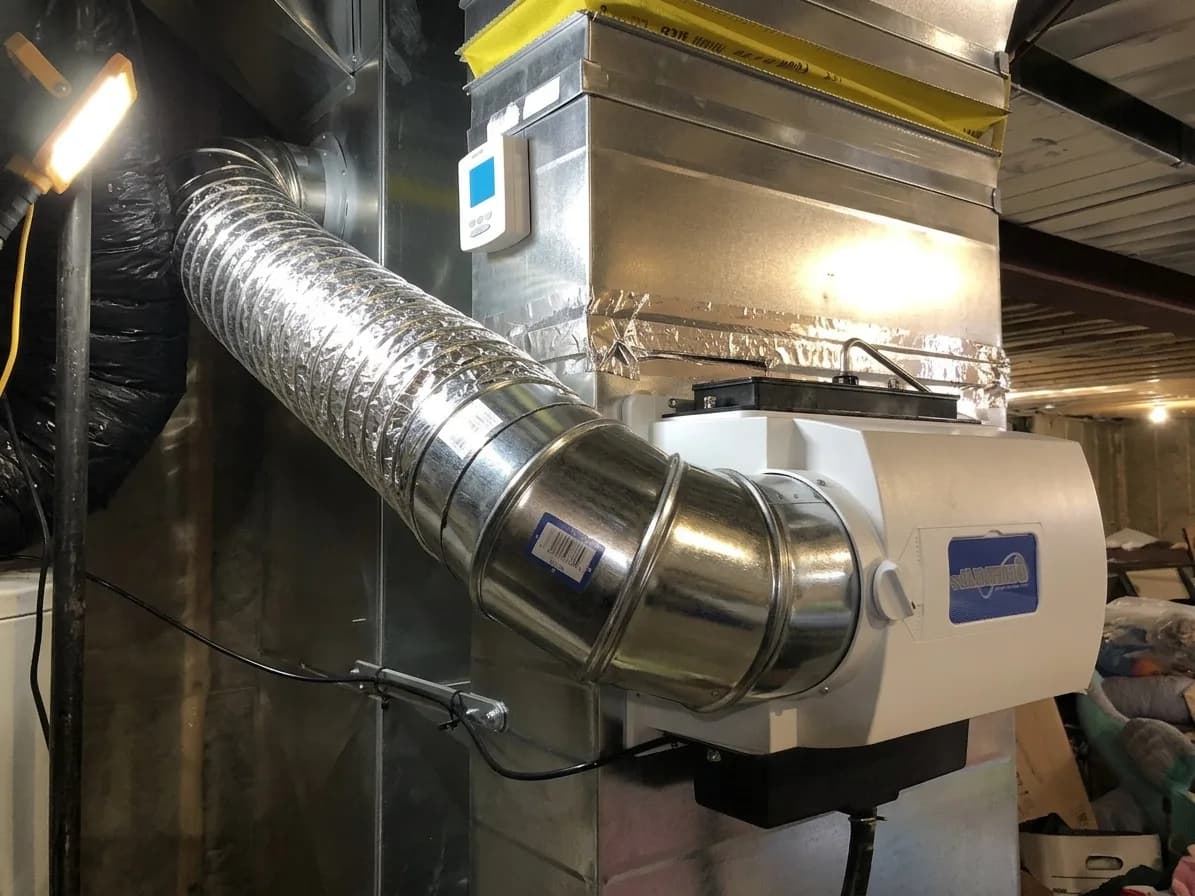
7. Check the humidifier pad
If you have a whole-home humidifier on the furnace, the evaporative pad needs annual replacement.
What to do:
- Find the humidifier (typically a beige or white box on the return duct)
- Open the cover (usually clips or a few screws)
- Pull the pad — it should look clean and porous
- Replace if it's mineralized white-grey crusty, cracked, or visibly degraded
- Run the humidifier briefly to check for water flow
Pads cost $20-$50 at HVAC supply houses or Home Depot. Annual replacement is recommended even on lightly-used humidifiers because mineral buildup blocks evaporation efficiency.
Also: switch the humidifier from "summer" position (off) to "winter" position (on) if your humidifier has a seasonal switch. See our dry winter air guide for the broader humidification conversation.
8. Clear furniture and rugs from registers
Air needs to flow freely through the system. Blocked registers cause uneven heating, reduce overall airflow, and stress the blower motor.
What to do:
- Walk every room
- Check each supply register (where warm air comes out): is anything within 12 inches?
- Check each return register (typically larger, sometimes at floor level or upstairs near ceiling): is anything blocking it?
- Common culprits: couches over floor registers, area rugs covering floor registers, drapes covering wall registers, large furniture pressed against return grilles
A blocked return register is worse than a blocked supply — it starves the furnace of return air, which causes overheating and short-cycling.
9. Test the ignition sequence
Listen to a full furnace cycle once before you really need the heat to work. You'll learn what normal sounds like.
What to do:
- Turn the thermostat 3°C above current room temp
- Listen to the sequence:
- Inducer fan starts (small whoosh sound) — 5-15 seconds
- Burner ignites (you'll hear a small whoomp or pop, then a steady combustion sound)
- After 60-90 seconds, the blower starts and warm air flows
- Furnace runs until the thermostat is satisfied
- Burner shuts off
- Blower continues for 60-90 seconds to clear residual heat
- Everything shuts down
Note anything unusual:
- Burner doesn't ignite within 30-60 seconds after inducer starts
- Burner ignites but shuts off after a few seconds (flame sensor failure)
- Blower doesn't start (or starts too early)
- Banging, rattling, or grinding sounds
- Smell of gas or chemical odours
Any of these get noted for the tech at the tune-up — or if they're severe, a service call before winter starts.
10. Walk through your no-heat plan
If something does go wrong in deep cold, knowing the next steps in advance saves panic time.
What to know:
- Where the furnace power switch is (usually beside or above the furnace — confirm you can find it)
- Where the gas shut-off valve is (look for a yellow handle on the gas line, usually within a few feet of the furnace)
- Where the breakers for the furnace and blower are
- Phone number for our service line, your gas utility's emergency line, and a backup HVAC company in case we're booked
- Where you'd go (family, hotel) if the furnace failed during a -20°C night
- Whether you have any space heaters and where they're stored
Most no-heat situations resolve within 24 hours. The minority that don't are when "I don't know where the gas valve is" matters.
What to skip on the DIY list
A few items that get mentioned in generic checklists but aren't worth your time as a homeowner:
- Cleaning the burner area yourself — risk of damage to flame sensor or other components; leave to the tech
- Adjusting gas pressure — TSSA-regulated work; not a homeowner job under any circumstances
- Opening the heat exchanger area — combustion gas exposure risk; tech only
- Pulling the blower for cleaning — usually unnecessary; the tech checks blower condition at tune-up
Stick to the externally-accessible items above. The tech handles the rest.
Putting it all together — the timeline
A realistic timeline for the fall HVAC prep:
| When | What |
|---|---|
| Mid-September | Walk the checklist; identify any visible issues |
| Late September / Early October | Book the tune-up appointment |
| Early October | Replace filter; clear vents and registers |
| Mid-October | Test thermostat, detectors, ignition sequence |
| Late October / Early November | Tune-up visit |
| Mid-November | First snow ready; system tested and serviced |
Doing this rhythm every fall keeps the system in good shape and catches the small issues before they become big ones.
What the tune-up adds
Working through the 10-step homeowner checklist catches the things you can see. The professional tune-up catches the things only a tech can measure:
- Heat exchanger inspection — visual + camera inspection for cracks. A cracked heat exchanger is a safety issue and an unrepairable replace-the-furnace situation. Catching this at tune-up is much better than catching it via CO alarm in deep January.
- Combustion analysis — measures the actual combustion efficiency, CO levels, and O₂ in the flue gas. A furnace that's drifted out of spec produces more CO, less heat per unit gas, and wears faster. Adjustments take 15-30 minutes and recover lost efficiency.
- Static pressure measurement — confirms the duct system is delivering air properly. High static pressure means the blower is fighting restriction (clogged filter, undersized ducts, blocked coil) and wearing out faster.
- Flame sensor cleaning — preemptive cleaning before the sensor fails completely. Cheapest preventive maintenance there is.
- Gas pressure measurement — confirms the gas supply pressure is correct. Drifted pressure causes inefficient combustion, soot buildup, and CO production over time.
If the tech finds an issue at tune-up, the conversation happens in October when scheduling is flexible — not at 11pm on a Saturday in January with the house dropping below 15°C.
What a fair tune-up costs in Oxford County
A real annual tune-up in Ontario in 2026 runs $150-$300:
- $130-$180 — 60-minute basic legitimate visit, filter replacement, basic checks
- $180-$300 — 90-minute thorough visit with full combustion analysis, written report, and detailed safety inspection
- Under $100 — usually a bait-and-switch sales pitch; the visit happens but a real tune-up can't be performed in that time and price. Walk away.
- Over $400 — overpriced unless deeper cleaning is included (heat exchanger pull-and-clean, induced draft motor servicing)
We don't do $49 specials. Our standard tune-up is the 90-minute thorough version.
Common questions
How often should a furnace be serviced?
Annually, before winter. Most warranty programs require annual servicing to remain valid. Skipped tune-ups correlate with emergency winter no-heat calls.
What if I forgot the tune-up last year?
Book this year's now. The tech will note anything that should have been caught last year and address it. If your last tune-up was 2+ years ago, mention that when booking so the tech can plan for slightly longer.
Should I drain water from the furnace before winter?
No. The furnace condensate drain is designed to keep flowing through winter; manually draining can disturb the trap and cause unburned-gas exhaust leaks. The tech checks and clears the drain at tune-up.
Can I do the tune-up myself?
No. A real tune-up involves combustion analysis equipment ($1,500-$4,000 instruments), TSSA-certified gas work, and electrical measurement that homeowners shouldn't attempt. The DIY checklist above is what you can do safely.
What if my furnace is brand new and was installed this summer?
You still want a fall check-in. Even new furnaces can drift in their first few months — gas pressure that was perfect at install in summer can need a small adjustment in deep cold. A short tune-up visit confirms the new equipment is dialled in.
How much does an annual maintenance plan cost?
Most Oxford County contractors offer maintenance plans for $180-$350/year that include the annual tune-up plus reduced rates on service calls. We can talk through whether a plan makes sense for your situation at the tune-up visit.
What's the deal with $49 furnace tune-up flyers?
They're sales lead generation. The economics force the tech to recover cost on something — usually a sales pitch for a new furnace, an oversold premium filter, or a system flush upsell. The visit happens but the value isn't real. Skip them.
Ready to book your fall tune-up?
We do thorough 90-minute tune-ups with combustion analysis, written reports, and no upsell pressure. October and early November appointments fill up — booking before mid-November gets you convenient time slots.
Request a quote or read more on furnace tune-up cost in Ontario, furnace tune-up service, and the furnace not heating checklist if something does go wrong. Service area: Woodstock + 30-minute radius covering Ingersoll, Tillsonburg, Tavistock, Norwich, Embro, Innerkip, Thamesford, Beachville, Salford, Mount Elgin, Burgessville, and Plattsville. Same-day service when scheduling allows.
Common Questions
Frequently asked
When should I schedule fall furnace maintenance?
Late September through mid-November. Booking in this window gets convenient appointment times and catches the typical fall failure points before the first deep cold snap. Calling in late December or January is an emergency-only conversation — full schedules everywhere.
What's included in a professional furnace tune-up?
A real 90-minute tune-up covers visual + safety inspection (heat exchanger, burner, venting, gas leak check), combustion analysis (CO levels, flue gas temperature, efficiency), static pressure measurement, flame sensor cleaning, condensate drain inspection, filter replacement, and a written report.
How often should I replace the furnace filter?
1-inch MERV 8: every 60-90 days. 1-inch MERV 11: every 45-75 days. 1-inch MERV 13: every 30-60 days. Heating season tends to load filters faster than summer — check more often during winter, especially if you have pets or recent renovation dust.
How often should I test my CO detector?
Every fall, plus monthly through the heating season. Replace batteries every 12 months. Replace the whole CO detector every 7-10 years per manufacturer recommendations — the sensors degrade even if the unit still beeps when tested. Every home with a gas furnace needs working CO detectors near sleeping areas.
What does a fall tune-up cost in Oxford County?
A real tune-up runs $150-$300 in 2026. The lower end ($130-$180) covers a 60-minute basic legitimate visit. The higher end ($180-$300) is a thorough 90-minute visit with combustion analysis, full safety checks, and a written report. Anything under $100 is usually a bait-and-switch sales pitch.
Can I skip the tune-up if my furnace seems to be working fine?
You can, but most warranty programs require annual servicing to remain valid, and skipped tune-ups correlate with emergency winter no-heat calls. The cumulative drift of unattended equipment adds up. Tune-ups catch developing issues before they fail in January.