Cost & Pricing
Furnace tune-up cost in Ontario 2026: what's a fair price?
A real furnace tune-up in Ontario in 2026 runs $150–$300. Anything under $100 is usually a sales call dressed up as a tune-up. This guide breaks down what should actually happen at a real tune-up, real prices, and how to tell whether you're getting the work or getting upsold.
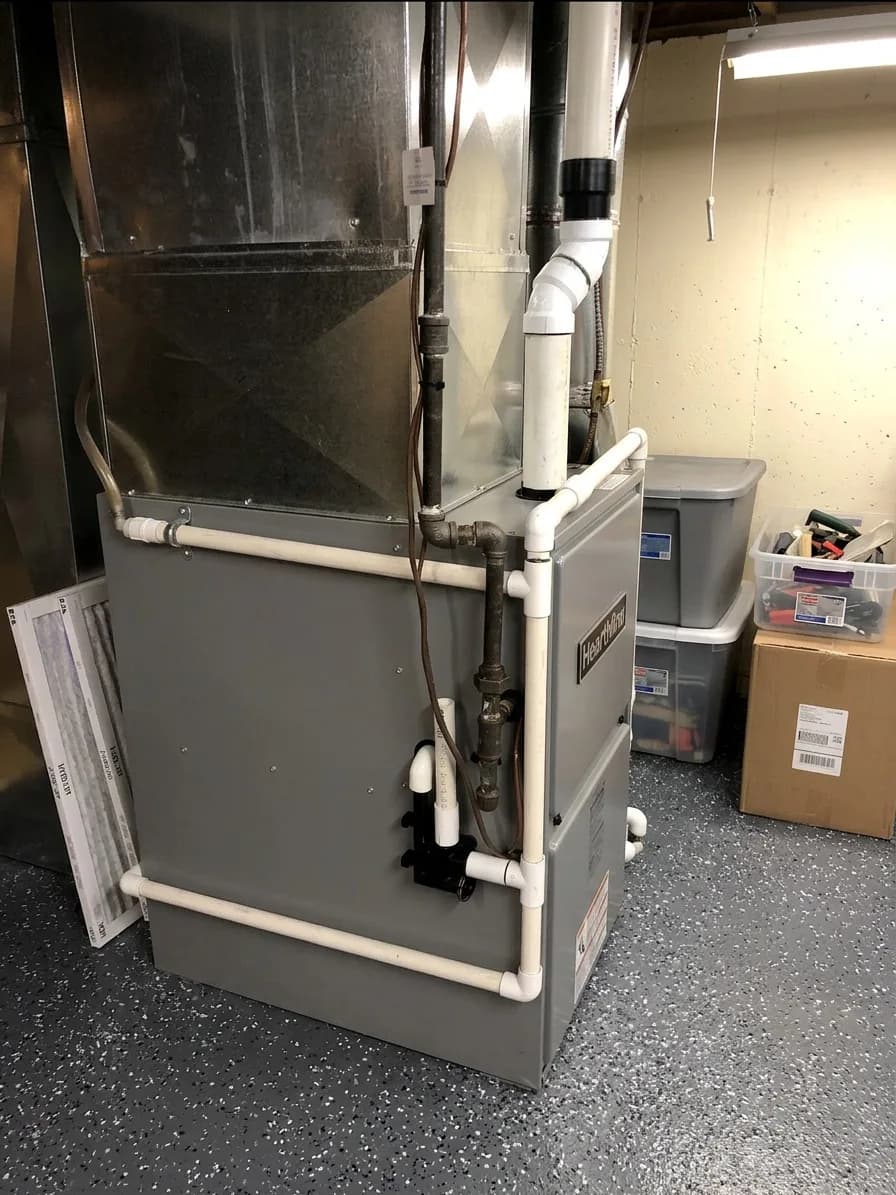
A real furnace tune-up in Ontario in 2026 runs $150 to $300 — closer to $150 for a basic single-unit visit, closer to $300 for a thorough multi-step inspection that includes combustion analysis, draft testing, and a full safety check. Anything under $100 is usually a sales call dressed up as a tune-up. Anything over $400 is overpriced unless extras like blower-motor cleaning, control-board diagnostics, or duct sealing are included.
We service Woodstock, Ingersoll, Tillsonburg, and the 30-minute radius around Oxford County. This guide breaks down what should actually happen at a tune-up, what real prices look like, and how to tell whether you're getting the work done or getting upsold.
What an honest tune-up looks like
A complete furnace tune-up takes a tech 60-90 minutes to do properly. Less than that and steps are getting skipped. The full checklist:
Visual + safety inspection (15-20 min)
- Inspect heat exchanger for cracks, corrosion, or signs of failure (a cracked heat exchanger means the unit needs to be shut down for safety — see our furnace not heating checklist)
- Check the burner assembly for soot, rust, or misalignment
- Inspect the venting (PVC pipes outside) for snow, ice, debris, or improper slope
- Check the gas supply line for leaks (soap test on connections)
- Visual inspection of the blower compartment for dust buildup or rodent activity
- Confirm CO detectors are present and within their working life
Performance + efficiency tests (20-30 min)
- Combustion analysis — measure CO levels in the exhaust (high CO indicates incomplete combustion or a venting issue)
- Static pressure test — measure pressure across the blower and coil to confirm airflow is in the manufacturer's spec
- Temperature rise test — measure temperature difference between return and supply air to confirm the furnace is heating to spec (typically 35-65°F rise, varies by model)
- Inspect and clean the flame sensor — a routine fix, but often overlooked at "tune-ups"
- Confirm igniter is operating correctly
- Check the pressure switch operation
- Verify the limit switch and rollout switches are operational
Cleaning + minor adjustments (15-20 min)
- Clean the burner area of accumulated dust
- Replace or clean the air filter (replacement filter usually charged separately if not customer-supplied)
- Clean the condensate drain trap and check for clogs
- Inspect the blower wheel and motor for dust buildup (a deeper clean adds time + cost if needed)
- Adjust gas pressure if out of spec
- Lubricate bearings on units that have lubrication points (most modern units are sealed)
Documentation (5-10 min)
- Record all readings — CO, gas pressure, temperature rise, static pressure
- Note any items found that need follow-up
- Provide written record to the homeowner
That's 21 items in roughly 90 minutes. A "$59 furnace tune-up" can't cover that ground at minimum-wage tech rates — what you're actually buying is a 20-minute filter swap plus a sales pitch.
Real Ontario tune-up price ranges
| Tier | Price range | What you should get |
|---|---|---|
| Bait-and-switch | $39–$89 | 15-minute visit, filter change, upsell pitch. Walk away. |
| Basic legitimate | $130–$180 | 60-minute visit covering safety + visual + filter, light cleaning. |
| Thorough | $180–$300 | Full 90-minute visit with all 21 checklist items + written report. |
| Annual maintenance plan (per visit) | $100–$200 | Same as thorough, prepaid in a multi-year plan with a discount. |
For most Oxford County homeowners, we recommend the thorough tier annually. That's the visit where developing problems get caught before they become emergency-call material in January.
Why tune-ups actually matter
A furnace is a combustion appliance that runs in your home unattended for thousands of hours each winter. Three categories of things change between October and April:
-
Things that gradually fail — flame sensors get coated, igniters age toward end of life, capacitors lose capacity, condensate drains accumulate scale and biofilm. A tune-up catches these while they're still cheap fixes.
-
Things that drift out of spec — gas pressure can creep up or down, blower speed can change as the wheel accumulates dust, ductwork develops small leaks, return air gets restricted by furniture moves or new filters. A tune-up restores baseline performance.
-
Things that become safety hazards — heat exchanger cracks, vent blockages, soot buildup, CO production from incomplete combustion. The tune-up is your safety check that catches these before they hurt someone.
The economics are simple: an emergency no-heat call in January is a 60-90 minute drive, an after-hours rate, plus parts at retail. A scheduled fall tune-up is 60-90 minutes at daytime rates, plus a small parts charge if something needs replacing. Most January no-heat calls would have been prevented by an October tune-up.
When to schedule
Best time for a furnace tune-up: late September through mid-November. Schedule before peak season. Trying to book a tune-up in early January means you're competing with emergency calls — both your time and the tech's schedule are constrained.
We try to send tune-up reminder notes in September each year. If you don't hear from us by mid-October, give us a call.
A spring or summer tune-up is also valid — many homeowners pair AC tune-ups with a furnace check in May. The advantage of fall is that you're testing the furnace right before you need it; the advantage of spring is that any parts needing order have time to arrive before winter.
What to look for in a tune-up provider
A few signals that separate honest providers from "tune-up specials" that exist to sell you a new furnace:
- Written checklist or report — the tech leaves you a record of every reading. No piece of paper, no documentation, no real tune-up.
- Time spent in the home — under 45 minutes is suspicious. Over 2 hours might mean they're padding (or finding real issues).
- No high-pressure replacement pitch — a clean tune-up should result in either "everything checks out" or "here are 1-2 things worth watching." If the tune-up turns into "you need a new furnace today," ask for the diagnostic evidence (heat exchanger photo, CO readings).
- Combustion analyzer in the truck — measuring CO in exhaust requires a calibrated instrument. If the tech doesn't pull one out, they aren't doing combustion analysis.
- Itemized invoice — what they did, what they replaced, what they measured. Vague invoices are a red flag.
- Honest about scope — a tune-up isn't a deep cleaning. If the blower wheel needs pulled and washed, that's a separate line. If duct cleaning is needed (it usually isn't in our experience — and we don't do duct cleaning ourselves), they should refer you out, not bundle it in.
What a tune-up doesn't cover
Some homeowners expect a tune-up to fix everything wrong with the furnace. It doesn't. Items that are separate work:
- Major component replacement — control boards, inducer motors, blower motors, gas valves, heat exchangers. These come up as recommendations during the tune-up, but they're separate work.
- Ductwork repair or rework — undersized ducts, leaky joints, bad transitions. Diagnosed at the tune-up, separate quote.
- Duct cleaning — we don't offer duct cleaning. If you genuinely need duct cleaning (most homes don't — well-sealed ducts stay clean for decades), we refer you to a specialist. Most "duct cleaning specials" are unnecessary upsells.
- Humidifier service — if you have a whole-home humidifier on the furnace, that's a separate piece of equipment with its own service needs (replace the water pad, clean the solenoid valve).
- Thermostat replacement or smart-home programming — if you want a Nest or Ecobee installed, that's a separate visit (or bundled by request at the tune-up).
- Repairs of issues found — the tech might find a bad flame sensor at the tune-up. Cleaning is usually included; replacement is usually a small extra charge. Larger repairs are scheduled as a follow-up.
How often should you schedule one?
Annual. Once per year, before winter. Skipping years is common but not recommended — most warranties require annual servicing to remain valid, and the cumulative drift of unattended equipment adds up.
The exception: brand-new furnaces in their first 1-2 years. The first tune-up should still happen in year 2 (warranty service), but a perfectly-installed unit doesn't generally need a year-one tune-up unless something specific calls for one.
Tune-up or full repair visit?
If your furnace is running but not heating right, or making unusual sounds, that's a repair call, not a tune-up. Tune-ups are scheduled maintenance on a system that's working. Repair calls diagnose and fix specific problems.
If we come for a tune-up and find a developing issue, we'll flag it on the report and quote a follow-up visit to address it. Some items get fixed during the tune-up (flame sensor cleaning, condensate drain clearing); larger items are scheduled separately.
If you're unsure whether your furnace is having trouble, work through our furnace not heating checklist first. If you've worked through it and the furnace is running fine but you're overdue for service, schedule a tune-up. If the furnace is misbehaving, schedule a furnace repair call instead.
What a tune-up tells you about replacement timing
For furnaces over 10 years old, the tune-up is also a checkpoint. The tech is recording readings over time — efficiency trending downward, CO creeping up, more components needing replacement each year. When the cumulative pattern points toward end-of-life, we'll surface that conversation honestly.
The $5,000 rule applies here too — if the next repair quote is $700 and your furnace is 14 years old, the multiplication is $9,800 and replacement is the better long-term play. See the $5,000 rule explainer.
For replacement pricing, our new furnace cost guide for Oxford County has the current ranges.
Common questions
Are "$49 furnace tune-up" specials real?
The visit happens. The tune-up doesn't. At $49, the tech needs to recover cost on something — usually that means a sales pitch for a new furnace, an oversold "premium filter," or a "system flush" upsell. Walk away from these.
Do I need a tune-up if my furnace works fine?
Yes. The point of preventive maintenance is to find problems before they become failures. The flame sensor that's going to fail in January doesn't announce itself in October — but the tech's reading on it will show degradation. Same with capacitors, ignition components, gas pressure drift.
How long should a real tune-up take?
60-90 minutes for a thorough job on a single-unit residential install. Longer for older or unusual equipment, or when the tech finds something needing extra attention. Under 30 minutes is not a tune-up.
What's the difference between a tune-up and a maintenance plan?
A tune-up is a single visit. A maintenance plan bundles the annual tune-up (or sometimes twice-yearly visits covering both AC and furnace) into a prepaid agreement, usually with priority scheduling and a discount on any repair work. Worth it if you intend to use the same provider for years.
Should I get the tune-up before or after a major weather change?
Before. Get the furnace ready for the cold snap, not after a problem shows up during it. Schedule late September through mid-November for furnace service; late April through May for AC service.
My contractor wants to replace something during the tune-up. How do I know if it's actually needed?
Ask for the evidence: the CO reading, the static pressure number, the photo of the heat exchanger, the capacitor reading vs spec. A reasonable provider will share the data. A pressure-sales provider will tell you to trust them. If you're unsure, ask for the recommendation in writing and get a second opinion before approving anything over a few hundred dollars.
Ready to schedule a tune-up?
Request a tune-up appointment and mention "furnace tune-up" in your message. We schedule late September through November as our peak tune-up window; off-peak slots are usually available with shorter wait times. Service area: Woodstock + 30-minute radius covering Ingersoll, Tillsonburg, Tavistock, Norwich, Embro, Innerkip, Thamesford, Beachville, Salford, Mount Elgin, Burgessville, and Plattsville.
For specific furnace tune-up details or if your furnace is already misbehaving, see our furnace repair page and the no-heat checklist first.
Common Questions
Frequently asked
How much should a furnace tune-up cost in Ontario?
A real tune-up runs $150–$300 in Ontario in 2026. The lower end ($130–$180) covers a 60-minute basic legitimate visit. The higher end ($180–$300) is a thorough 90-minute visit with combustion analysis, full safety checks, and a written report. Anything under $100 is usually a bait-and-switch sales pitch. Anything over $400 is overpriced unless deeper cleaning is included.
What's included in a real furnace tune-up?
A complete tune-up covers visual + safety inspection (heat exchanger, burner, venting, gas leak check), performance testing (combustion analysis, static pressure, temperature rise), cleaning (flame sensor, condensate drain, burner area), filter replacement, and documentation of all readings. The full 21-step checklist takes 60-90 minutes.
How often should I get my furnace tuned up?
Annually, before winter. Best window is late September through mid-November. The annual visit catches gradual failures (flame sensors, igniters, capacitors) and drift in critical readings (gas pressure, combustion) before they become emergency no-heat calls in January. Most warranties require annual servicing to remain valid.
Are $49 furnace tune-up specials real tune-ups?
No. The visit happens, but a real tune-up can't be performed in the time and price the special covers. The economics force the tech to recover cost on something — usually a sales pitch for a new furnace, an oversold premium filter, or a system flush upsell. Walk away from these specials.
What's the difference between a tune-up and a repair visit?
A tune-up is scheduled maintenance on a working furnace. A repair visit diagnoses and fixes a specific problem. If your furnace is running fine, schedule a tune-up. If it's misbehaving (no heat, short cycling, unusual sounds), schedule a repair call instead.
Can I skip the annual tune-up?
You can, but the cumulative drift of unattended equipment adds up. Most warranty programs require annual servicing to remain valid. Skipped tune-ups often correlate with emergency winter no-heat calls — which cost far more than the tune-up did. Annual maintenance is the cheapest insurance against winter HVAC emergencies.