Troubleshooting
Furnace short cycling: 5 causes and how to fix each
A short-cycling furnace turns on, runs for less than 5 minutes, shuts off, and starts again within 10-15 minutes — over and over. Five common causes: plugged filter, thermostat placement, oversized furnace, dirty flame sensor, and overheating. This guide walks through identifying which is yours.
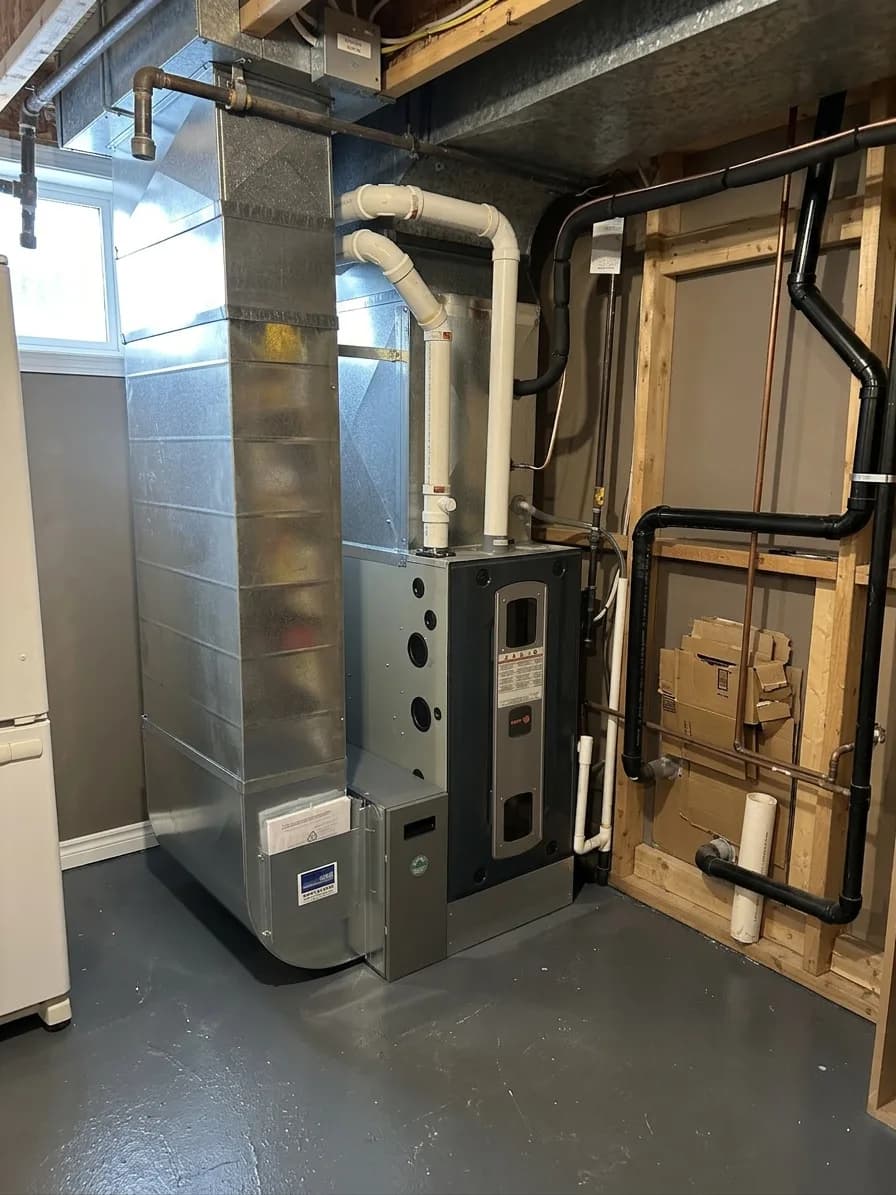
A short-cycling furnace turns on, runs for less than 5 minutes, shuts off, and starts again within 10-15 minutes — over and over. The five most common causes, in order of how often we see them: a plugged air filter, a thermostat placement or wiring issue, an oversized furnace, a dirty flame sensor, and overheating from a failing limit switch. Three of those five are homeowner-fixable; two need a technician. This guide walks through how to identify which cause is yours and what to do about it.
If your furnace is also blowing cold air or failing to heat entirely, work through our furnace not heating checklist first. Short cycling means the furnace is starting and stopping rapidly — not that it isn't starting at all.
What "short cycling" actually means
A normally-operating furnace runs in cycles of 10-20 minutes on, then off until the room temperature drops below setpoint, then back on for another 10-20 minute cycle. On a cold January night that might be 20-25 minutes on, 5-15 minutes off. On a milder fall day it might be 8-15 minutes on, 30+ minutes off.
Short cycling is when the on-cycles drop below 3-5 minutes and the off-cycles drop below 5-10 minutes — sometimes 1-minute on / 2-minute off cycles. The furnace can't complete a full heating cycle before something shuts it off.
A short-cycling furnace wastes gas (start-up is the least efficient part of the cycle), wears out components faster (every ignition cycle stresses the igniter and flame sensor), and leaves the house with uneven heat (the cycle is too short to actually warm the rooms farthest from the air handler).
The five common causes:
Cause 1: Plugged air filter (homeowner-fixable)
This is the single most common cause of short-cycling, and the easiest to fix.
A plugged filter starves the furnace of return air. The furnace heats up the small amount of air that does get through, the limit switch detects the high temperature in the heat exchanger, and shuts the burner off as a safety. The blower keeps running to cool the exchanger; once it cools below the limit threshold, the burner kicks back on; the cycle repeats every few minutes.
How to check:
- Find the air filter (typically at the cold-air return near the furnace, or inside the furnace door)
- Pull it out and hold it up to a light
- If you can't see light through it, replace it
- Run the furnace for 30 minutes after replacing — if cycles return to normal (10-20 minutes on), you found the problem
How often this catches it: roughly 30-40% of "my furnace is short-cycling" calls we get. Free fix at home.
Cause 2: Thermostat placement or wiring (sometimes homeowner-fixable)
The thermostat tells the furnace when to start and stop. If the thermostat is in the wrong place — getting hit by direct sunlight, near a heat source, on an outside wall — or wired incorrectly, it can call for heat in short bursts.
Common thermostat-driven short cycling scenarios:
- Thermostat in direct sun for a few hours each day — the sensor reads the sun-warmed wall temperature, satisfies setpoint, shuts off the furnace; the rest of the house is still cold; the sun moves, the thermostat re-reads colder, calls for heat; cycle repeats
- Thermostat above a heat source (vent, fireplace, lamp) — gets warm fast from the local heat, shuts the furnace off before the actual room is warm
- Thermostat on an outside wall — reads colder than the actual room temperature, calls for more heat than needed
- Thermostat in a hallway with no return airflow — temperature reading lags the rest of the house
- Wiring issue — anticipator setting wrong on older thermostats, or a wiring fault calling for heat in micro-cycles
How to check:
- Look at where the thermostat is mounted. Is it in direct sunlight at any time of day? Above a vent? On an outside wall?
- Try moving a thermometer to the middle of the room (waist height, away from walls) and compare the reading to the thermostat
- Check the thermostat's programmed temperature schedule — sometimes "smart" schedules create their own short-cycle patterns
If the placement is clearly wrong, moving the thermostat is a 1-2 hour electrician or HVAC tech job — wires need to be re-routed. If the placement is OK but the readings are off, the thermostat itself might need replacement (modern $150-300 thermostats are more accurate than 20-year-old mercury bulbs).
How often this catches it: roughly 15-20% of short-cycle calls.
Cause 3: Oversized furnace (tech assessment required)
An oversized furnace heats the air too fast for the thermostat to read the temperature change. The furnace runs for 4-6 minutes, the thermostat satisfies, the furnace shuts off, the room cools, the furnace starts again. Lather, rinse, repeat — for the entire heating season.
This is the most common cause of short-cycling in homes where the furnace was sized by the old square-footage rule of thumb (1 BTU per square foot, or 30-40 BTU per square foot) rather than a proper Manual J calculation.
How to identify:
- Furnace short-cycles in mild weather (October, November, March, April) but runs longer cycles in deep January cold
- House has noticeably uneven temperatures — some rooms always cold, some always overheated
- BTU rating on the furnace data plate looks high relative to home size (e.g., 100,000 BTU on a 1,500 sq ft post-2010 home is almost certainly oversized)
- New furnace was installed recently and short-cycling started immediately
How to confirm: a tech runs Manual J on the home and compares to the actual installed BTU. If the existing furnace is 30%+ larger than needed, that's the problem.
How to fix:
- Downsize at next replacement — when the furnace is due for replacement anyway, right-size to the actual heat load. See our furnace sizing guide.
- Add a two-stage or modulating capability if available — a two-stage gas valve retrofit isn't common but exists for some models
- Adjust gas pressure down to derate the burner — possible on some furnaces, ask a qualified tech; this is a band-aid that reduces BTU output
- Tighten the thermostat differential — a wider differential ("don't call for heat until 1.5°C below setpoint, run until 1.5°C above") lengthens cycles
Most oversized-furnace short-cycling is mild enough to live with for years before replacement. We'll flag it at a tune-up and discuss whether right-sizing makes sense at next replacement.
How often this catches it: roughly 15-20% of short-cycle calls, especially in homes that were retrofitted with better insulation but kept the original furnace.
Cause 4: Dirty flame sensor (homeowner-aware, tech to fix)
The flame sensor is a small metal rod inside the burner area. Its job is to confirm the flame is actually lit. If the sensor stops detecting flame, the furnace shuts the gas valve as a safety — even though the flame is actually burning.
A dirty flame sensor (coated with combustion byproducts over years) starts to fail intermittently — sometimes it detects the flame, sometimes it doesn't. The furnace lights, runs 30-60 seconds, the sensor falsely reports "no flame," the furnace shuts off the gas, the cycle repeats.
This is the #1 actual repair fix for "my furnace turns on then shuts off in under a minute" calls.
How to identify:
- Cycles are very short — 30 seconds to 2 minutes on, then shutoff
- You can hear the burner ignite, then go off, then re-ignite a few minutes later
- The pattern is intermittent at first, then more frequent
- Common in furnaces 5-15 years old
How to fix: flame sensor cleaning takes 10-15 minutes for a tech. The sensor is unscrewed, gently buffed with fine sandpaper or a Scotch-Brite pad to remove the oxidation layer, and reinstalled. Cost is usually a small repair charge. If the sensor is past its useful life, replacement is also cheap.
We don't recommend homeowners attempt this themselves — it's near live gas connections, and reinstalling incorrectly can create a real safety issue.
How often this catches it: roughly 10-15% of short-cycle calls; higher % among "the furnace shuts off after a few seconds" calls.
Cause 5: Failing limit switch / overheating (tech to diagnose)
The limit switch is a safety that shuts off the burner if the heat exchanger gets too hot. It's supposed to prevent damage from overheating. When the switch fails or trips repeatedly, the furnace short-cycles.
Causes of overheating that trigger limit switch shutdowns:
- Plugged air filter (see cause 1)
- Blocked ducts or closed registers (homeowner closing too many vents)
- Dirty blower wheel — blower can't move enough air
- Failing blower motor — motor running slow, less airflow
- Cracked or partially blocked heat exchanger — heat can't escape into the airstream
- Limit switch itself failing — false-positive overheat detection
- Gas pressure too high — burner producing more heat than the design
How to identify:
- Furnace cycles short (3-5 minutes) regardless of outside temperature
- You can sometimes hear the blower running longer than the burner — the burner shuts off, blower keeps running for 90 seconds, then everything restarts
- Furnace is 10+ years old (limit switch wear), or there's been a recent issue with the blower
How to fix: a tech diagnoses which of the above is happening. Blower wheel cleaning, blower motor replacement, limit switch replacement, gas pressure adjustment, or in worst cases heat exchanger inspection (if the heat exchanger is cracked, the furnace needs to be shut down — see the furnace not heating checklist for the safety conversation).
How often this catches it: roughly 10-15% of short-cycle calls; higher in furnaces over 10 years old.
How to tell which cause is yours
Walk through this decision tree quickly:
-
Is the air filter clean? Pull it out, check it. If plugged, that's likely cause 1. Replace and observe for 30 minutes.
-
Is the thermostat in direct sunlight, above a heat source, or on an outside wall? If yes, that's likely cause 2. Try moving a thermometer to the middle of the room and compare — if there's a significant temperature difference, the thermostat is reading wrong.
-
Is the furnace clearly oversized for the home? (Check the BTU on the data plate against your home's heating load — a 100,000 BTU furnace on a 1,400 sq ft post-2000 home is almost certainly oversized.) If yes, that's likely cause 3.
-
Does the burner light, run 30-90 seconds, then shut off and re-light a few minutes later? That's the classic flame sensor failure pattern — cause 4.
-
Does the furnace short-cycle even on coldest days with a clean filter and properly-placed thermostat? That's a limit switch / overheating pattern — cause 5.
Causes 1 and 2 are usually homeowner-fixable. Cause 3 is "live with it until replacement." Causes 4 and 5 are tech fixes.
When to skip the checklist and call
Call right away in any of these situations:
- The breaker trips when the furnace short-cycles (electrical fault)
- You smell gas during the cycle (gas valve issue — leave the house, call gas utility first)
- The short-cycling started immediately after another contractor worked on the furnace (something done during the prior service might need correction)
- The cycles are extremely short (under 1 minute on, under 1 minute off) — likely a serious fault
- The furnace is producing smoke or unusual smells
Related and look-alike problems
Some symptoms look like short-cycling but are actually something else:
- "The furnace runs constantly without ever shutting off" — that's the opposite problem. Usually undersized furnace, very cold outside, or thermostat stuck. Not short-cycling.
- "The fan keeps running even when the burner isn't on" — thermostat is set to FAN ON instead of FAN AUTO. Not a furnace problem.
- "The furnace cycles on every 30-45 minutes" — that's normal operation in mild weather. Not short-cycling.
- "The furnace shuts off then won't restart" — that's no-heat, not short-cycling. See our furnace not heating checklist.
Why short cycling matters
A short-cycling furnace causes a few real problems:
- Wears components faster — every ignition cycle is hard on the igniter, flame sensor, gas valve, and control board. A furnace short-cycling all winter could see 2-3× the normal ignition count.
- Wastes gas — start-up is the least efficient part of the cycle. Short cycles spend more time in start-up and less time at peak efficiency.
- Causes uneven heat — rooms farther from the air handler don't get enough warm-air-circulation time.
- Stresses ductwork — frequent thermal cycling can stress duct joints and accelerate wear.
- Drives up the gas bill noticeably — depending on cause, can add 10-25% to the heating bill.
If your furnace has been short-cycling for a season or two, the additional wear may also accelerate the timing on the next major repair or replacement. See our $5,000 rule explainer for the repair-vs-replace math.
What we do at a short-cycling diagnostic visit
When we come out for a short-cycling complaint, we typically:
- Pull the air filter and inspect
- Check the thermostat placement, settings, and wiring
- Read the furnace data plate and assess sizing vs the home (this takes a minute, not a full Manual J — but enough to flag clear oversize)
- Run the furnace through several cycles and time them
- Inspect the flame sensor (visual + electrical check)
- Test the limit switch
- Check static pressure across the blower (low static = airflow problem)
- Inspect the blower wheel for dust
- Check gas pressure
- Report findings and recommend next steps
Most short-cycling issues are diagnosed in 45-60 minutes. The fix (flame sensor cleaning, limit switch replacement, blower wheel cleaning) usually happens at the same visit if parts are in the truck.
Common questions
Can I keep using a short-cycling furnace until I get it fixed?
For a few days, yes — short cycling isn't a safety issue on its own (the safeties are working as designed). For weeks or months, you're paying more in gas and wearing components faster. Get it fixed within a few weeks.
Is short cycling dangerous?
Not in itself. The safety switches that cause some short-cycling are doing their job — preventing actual unsafe operation. But the underlying cause (heat exchanger issue, gas pressure issue, blower fault) might be safety-related and warrant investigation.
Will a smart thermostat fix short cycling?
Sometimes, for cause 2 (thermostat-driven). A modern smart thermostat with adaptive learning can adjust to the home better than an older dial thermostat. But it can't fix oversized equipment, a plugged filter, or a flame sensor issue.
How long should a normal furnace cycle be?
10-20 minutes on, then off until the temperature drops. In very cold weather, longer on-cycles. In mild weather, longer off-cycles. Anything under 5 minutes on and under 5 minutes off is short cycling.
Will adding a humidifier or air purifier affect cycling?
Whole-home humidifiers can change the perception of comfort (you feel warmer at the same temperature when humidity is right), which can change how often you call for heat. They don't usually cause short cycling. Air purifiers attached to the air handler can affect airflow if poorly installed; rare cause of cycling.
My furnace was fine last winter and started short-cycling this winter. What changed?
Most common reason: filter is overdue for change. Next most common: flame sensor accumulated enough coating to start failing intermittently. Less common: blower wheel built up enough dust to restrict airflow. Annual tune-up catches all three of these before they start cycling — see our furnace tune-up cost guide.
Ready to fix the cycling?
Request a service call and mention "furnace short cycling" in the message. We'll diagnose the actual cause and quote the fix. Service area: Woodstock + 30-minute radius covering Ingersoll, Tillsonburg, Tavistock, Norwich, Embro, Innerkip, Thamesford, Beachville, Salford, Mount Elgin, Burgessville, and Plattsville.
For more on furnace repair or to read about the $5,000 rule for HVAC, see the linked guides.
Common Questions
Frequently asked
What causes a furnace to short cycle?
Five common causes, in order of how often we see them: a plugged air filter (30-40% of calls), a thermostat placement or wiring issue, an oversized furnace, a dirty flame sensor, and overheating from a failing limit switch or blower problem. Three of those five are diagnosable at home; two need a technician.
How short is short cycling?
On-cycles under 3-5 minutes with off-cycles under 5-10 minutes. Sometimes 1-minute on / 2-minute off. Normal cycles are 10-20 minutes on, with off-cycles depending on outside temperature. Anything under 5 minutes on is short cycling.
Can a plugged filter cause short cycling?
Yes — this is the #1 cause. A plugged filter starves the furnace of return air. The heat exchanger overheats, the limit switch trips, the burner shuts off. The blower keeps running to cool the exchanger; once cool, the burner restarts; cycle repeats. Replacing the filter typically resolves it within one hour.
Why does my new furnace short cycle?
Most common cause: oversized for the home. The furnace heats the air too fast for the thermostat to read the change, satisfies setpoint in 4-6 minutes, shuts off, the room cools, the furnace starts again. If your new furnace is short-cycling, get a tech to run Manual J on the home and compare to the installed BTU rating. Right-sizing usually requires replacement; gas pressure derating is a band-aid.
What's the most common short-cycling repair?
Flame sensor cleaning. A dirty flame sensor starts to fail intermittently, the furnace ignites, the sensor falsely reports no flame after 30-60 seconds, the gas shuts off, the cycle repeats. Cleaning takes a tech 10-15 minutes. Often the simplest fix for the 'ignites then shuts off' pattern.
Is short cycling dangerous?
Not in itself — the safety switches that cause some short-cycling are doing their job. But the underlying cause might be safety-related (heat exchanger issue, gas pressure problem) and warrant investigation. Plus short-cycling wears components faster, wastes gas, and produces uneven heat. Fix it within a few weeks.