Troubleshooting
Furnace blowing cold air: 8 causes and fixes
A furnace blowing cold air almost always traces back to one of 8 things: thermostat set to FAN ON, burner not igniting, tripped pressure switch, blower starting too early, clogged condensate drain, blocked vent, oversized furnace cycling, or cracked heat exchanger. Three are DIY-checkable in 10 minutes.
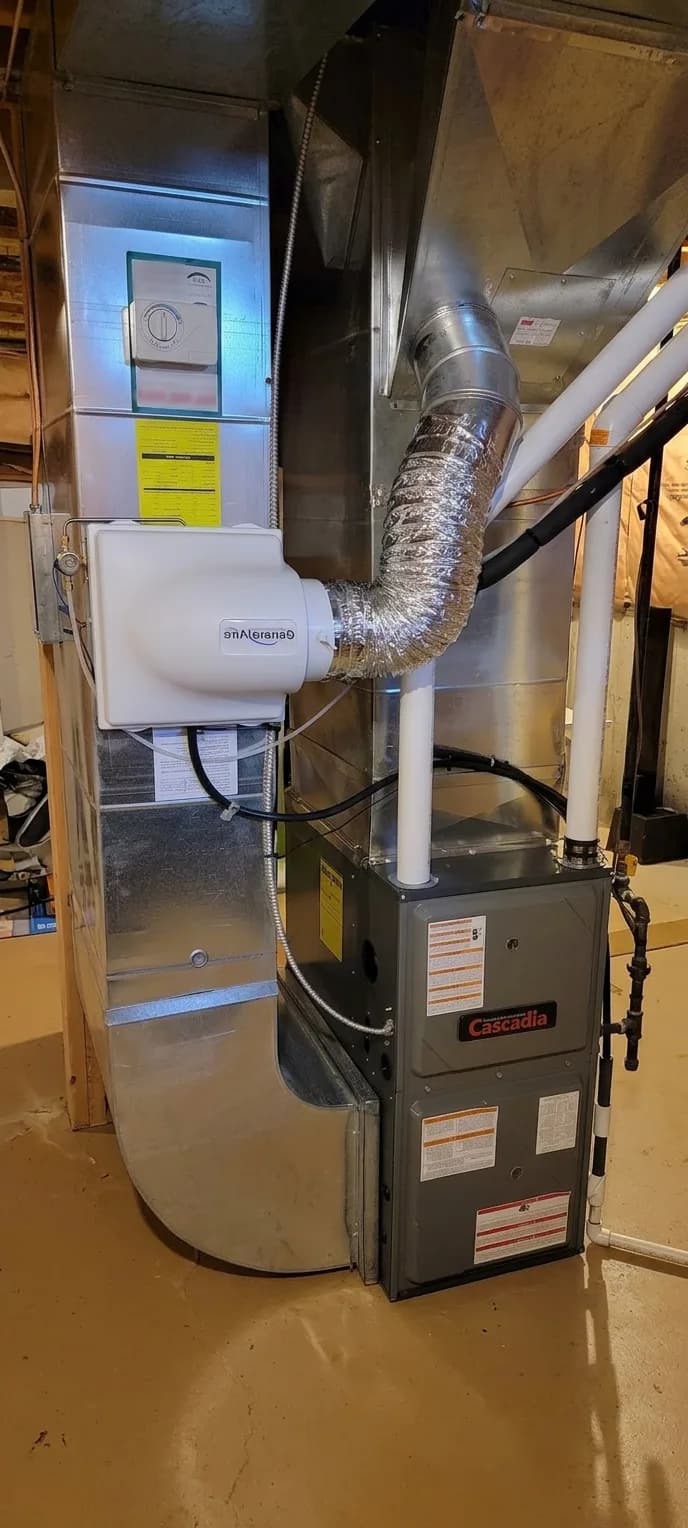
A furnace blowing cold air almost always traces back to one of 8 things: the thermostat is set to FAN ON instead of AUTO, the burner isn't igniting (flame sensor, igniter, or gas valve), a tripped pressure switch, the blower starting before the heat exchanger is hot, a clogged condensate drain shutting the burner down, a blocked vent triggering safety lockout, an oversized furnace cycling too fast, or — rarely but seriously — a cracked heat exchanger. Three of the eight you can diagnose in under 10 minutes. The other five need a technician. This guide walks through the order we'd check them in.
If your furnace is running but blowing cold air through the vents, work through the homeowner checks first (steps 1-3), then jump to step 8 if you smell anything unusual. Anything you can't resolve at home moves to a service call. Same-day service when scheduling allows — see our furnace repair page for what to expect.
The short version: order of checks
| Cause | Symptom | DIY or tech? |
|---|---|---|
| 1. Thermostat set to FAN ON | Constant cool air flow even when furnace not heating | DIY |
| 2. Burner not igniting | Inducer fan runs, no flame, blower kicks in cool | Tech |
| 3. Tripped pressure switch | Inducer fan starts then stops, no flame | Tech |
| 4. Blower starting too early | Burner lights, blower starts within seconds (cool blast) | Tech |
| 5. Clogged condensate drain | Furnace runs briefly then quits, repeats | DIY (sometimes) / Tech |
| 6. Blocked vent | Burner lights then shuts off, error code | DIY check / Tech to reset |
| 7. Oversized furnace cycling | 3-5 minute heat then cool blast as it shuts off | Tech (sizing review) |
| 8. Cracked heat exchanger | Yellow flame, odd smell, CO detector activity | Shut off — Tech immediately |
1. Check the thermostat fan setting
This is the catch-everything first check. Almost every furnace thermostat has two modes for the fan: AUTO (fan runs only when the furnace is calling for heat) and ON (fan runs continuously, regardless of heat call).
When the fan is set to ON, the blower runs even when the burner is off, which means cool basement air gets pulled through the ducts and blown out the vents. Feels exactly like the furnace is broken even though it's working fine.
Quick check:
- Look at your thermostat screen
- Find the fan setting (usually a button or sub-menu)
- If it says ON, switch it to AUTO
- Wait a few minutes — the blower should stop running when the furnace isn't heating
Common reason this happens: kids playing with the thermostat, or someone in the household set FAN ON last summer for circulation and forgot to switch back in fall. Catches more "cold air" calls than people would guess.
2. The burner isn't igniting
If the furnace turns on, the inducer fan starts (you can hear a small motor whoosh), but no actual flame fires up, the burner isn't igniting. After about 30-60 seconds, the safety controls give up, the blower runs to clear unburned gas, and you get cool air through the vents.
Three common causes — all need a tech:
Dirty flame sensor. The flame sensor is a small metal rod inside the burner area. It tells the control board "the flame is lit" within 2-3 seconds of ignition. When it's coated with gunk (a normal carbon buildup over years), it stops sensing flame even though the flame is lit, and the safety controls shut the gas off as a protection. Cleaning takes a tech 10-15 minutes. Cheapest furnace repair there is — typically $130-$220 for the service call.
Failed igniter. The hot-surface igniter is a small ceramic rod that glows orange-red to light the gas. They have a finite lifespan (3-7 years typical) and tend to fail in cold weather when they're working hardest. Replacement takes 20-30 minutes. Parts run $30-$80 plus labour.
Gas valve issue. Less common but more involved. The gas valve might be stuck closed, the gas supply might have been interrupted, or the control board is failing to call for gas. Repair scope ranges from "check that the gas valve is in the ON position" (DIY, but only do this if you know what you're doing) to full gas valve replacement ($350-$600).
If you hear the inducer fan start and never hear actual burner ignition, this is your category.
3. A tripped pressure switch
The pressure switch is a safety device that confirms the inducer fan is creating enough draft to safely pull exhaust gases out through the venting. If draft isn't established within a few seconds, the pressure switch trips, the gas valve never opens, and the burner doesn't light.
Why the pressure switch trips:
- Blocked exhaust or intake vent (snow, ice, leaves, mud daubers in summer)
- Clogged condensate drain backing up against the inducer
- Failed inducer fan motor
- Failed pressure switch itself (less common)
A homeowner can sometimes resolve this by clearing snow or ice from the outside venting (see step 6). Anything else — including a "swap the pressure switch" repair — is a tech job. Pressure switches aren't expensive ($50-$120 part) but the diagnostic requires checking what tripped it first; just swapping the switch without finding the underlying cause doesn't fix anything.
4. The blower is starting too early
Properly-running furnaces wait until the heat exchanger is hot before starting the blower. The control board reads a temperature signal from the heat exchanger and starts the blower only when the air will actually be warm.
If something fails in that timing — a failing control board, a bad fan limit switch, or a sequencer issue — the blower starts within seconds of the burner lighting. You get an initial blast of cool air before the heat exchanger warms up enough to actually heat the air being moved through it.
Symptom that points to this:
- You hear the burner ignite
- Almost immediately you hear the blower start
- Vents blow cool air for 30-90 seconds, then warm air starts coming out
The repair is a tech call — diagnosis confirms whether it's the fan limit switch (cheaper, $80-$150 part) or the control board (more expensive, $250-$450 part) or simply a programming issue on a modern variable-speed unit.
5. A clogged condensate drain
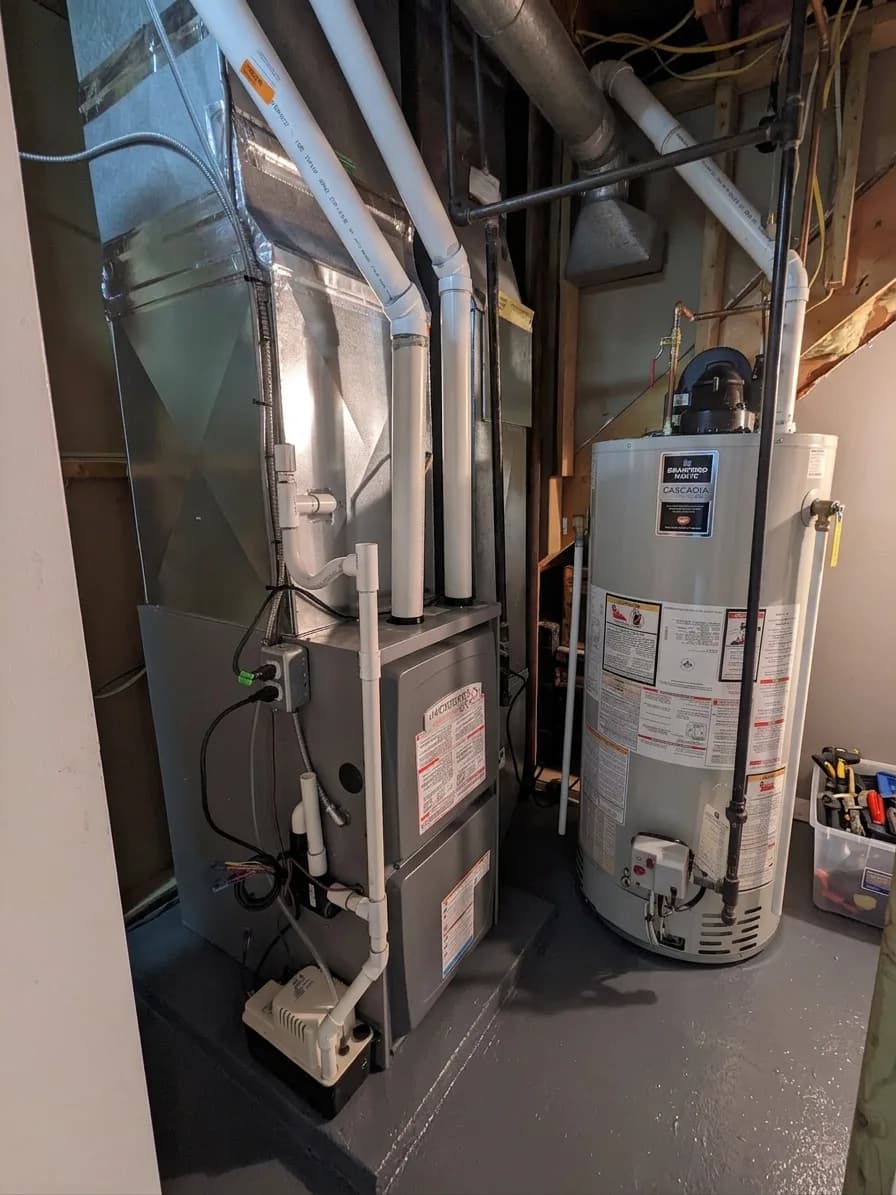
High-efficiency furnaces (95%+ AFUE — almost everything installed in the last 15 years) produce condensation as they burn gas. The condensate drains through a small clear plastic tube to a floor drain. If that drain clogs, water backs up into the inducer assembly or pressure switch tubing and triggers a safety shutdown. The furnace ignites briefly, the safety trips, the burner shuts off, the blower runs to cool everything down, and you get cool air.
DIY check:
- Find the clear plastic tube running from the furnace to a floor drain
- If the tube is full of cloudy stagnant water that isn't moving, the drain is backed up
- If the tube runs near an exterior wall and you've had a cold snap, it may be frozen
- Look for water under or near the furnace — there shouldn't be any
Clearing a clogged condensate drain involves disassembling the trap, flushing with a vinegar-and-water solution, and reassembling. Some homeowners are comfortable with this, most aren't. If you've had a frozen condensate line, the fix is rerouting or insulating the line — a tech job.
If you ignore a clogged condensate drain it'll resolve into a no-heat call within hours or days. Worth catching early. See our related condensate pump troubleshooting guide for pump-specific failures.
6. A blocked vent on the outside
If your furnace is high-efficiency (vents out a sidewall through PVC pipes, not up a chimney), look at the outside vent terminations. Snow, ice, leaves, mud, even bird nests in fall and summer can block the intake or exhaust pipe. A blocked vent trips the pressure switch and the burner won't light.
DIY check:
- Walk around the house and find the white PVC pipes coming out of an exterior wall (usually two pipes, one intake, one exhaust)
- Clear at least 12 inches of space around the openings
- Knock off snow or ice rings — don't chip with a sharp tool
- Look inside the pipes (carefully) for debris
Once the obstruction is clear, the pressure switch resets automatically. The furnace should resume normal operation within a few minutes. If it doesn't restart on its own, cycle the thermostat off and back on, then give it 60 seconds.
If the vents are clear and the furnace still won't light, you're looking at one of the deeper causes — a tech call.
7. An oversized furnace cycling too fast
This one doesn't look like "blowing cold air" at first glance — it shows up as the furnace running for 4-6 minutes, satisfying the thermostat, shutting off, then blowing cool air for 60-90 seconds as the blower clears residual heat from the heat exchanger. If you walk past a vent during that cool-down blow, the air feels cold.
The root cause is the furnace being too big for the home. The blower runs for 60-90 seconds at the end of every cycle by design, to recover heat trapped in the heat exchanger. On a properly-sized furnace, the cycle is long enough that the cool-down phase is a small fraction of the runtime. On an oversized furnace, the cool-down phase is almost as long as the heating phase, so it feels like the furnace is blowing cold air half the time.
The fix is a sizing conversation:
- A tech runs Manual J on your home and compares to the installed BTU rating
- If oversized, options include gas pressure derating (band-aid), staging adjustment (if the furnace is two-stage and only running in high stage), or replacement with a correctly-sized unit
See our furnace short cycling guide and furnace sizing guide for the longer conversation on this.
8. Cracked heat exchanger — stop and call
This is the rare-but-serious one. The heat exchanger is the metal chamber that separates combustion gases from the air that goes into your home. When it cracks, combustion gases (including carbon monoxide) can mix with your supply air. The safety controls usually detect this and shut the burner down — leaving you with the blower running and blowing cool air.
Signs of a cracked heat exchanger:
- Yellow or orange flame instead of clean blue
- Unusual furnace smell (sulfurous, oily, or chemical)
- CO detector activity
- Visible soot accumulation near the furnace
- Persistent headaches or nausea when the furnace runs
If you suspect a cracked heat exchanger:
- Shut the furnace off at the thermostat
- Turn off the power switch beside the furnace
- Open a window for ventilation
- Make sure CO detectors are working
- Call us (or another HVAC company) — do not attempt to keep using the furnace
Cracked heat exchangers can't be safely repaired. The fix is a new furnace. See our $5,000 rule explainer for the repair-vs-replace math, though for cracked exchangers it's replace regardless of age.
What to do right now, in order
- Check the thermostat fan setting (AUTO not ON) — 30 seconds
- Listen to a full furnace cycle — does the burner light? Does the blower start at the right time? — 5 minutes
- Walk outside and check the venting for snow, ice, debris — 5 minutes
- Check the condensate drain for standing water in the clear tube — 2 minutes
- Note any unusual smells, sounds, or symptoms — write them down for the tech
- Call if any of 2-5 turned up a problem you can't fix yourself
If you smell gas, hear a loud bang from the furnace, or your CO detector goes off — stop the troubleshooting and call your gas utility's emergency line first, then us.
What to have ready when you call
A few details speed up the diagnostic:
- The age of your furnace (rough is fine)
- The make and brand (often printed inside the furnace door)
- What you've tried from the checklist above
- Any error codes on the furnace control board (most modern boards have a small LED that blinks a pattern — count the blinks and write it down)
- Whether the issue is constant or intermittent
- Whether anything unusual happened recently — power outage, contractor in the basement, new appliance install
How we'd handle each cause on a service visit
| Cause | Typical visit | Typical cost |
|---|---|---|
| Thermostat setting | No visit needed | $0 |
| Flame sensor cleaning | 30-45 minutes | $150-$220 |
| Igniter replacement | 30-60 minutes | $200-$320 |
| Pressure switch + diagnosis | 60-90 minutes | $250-$400 |
| Blower timing / fan limit | 60-90 minutes | $200-$450 |
| Condensate drain clear | 30-60 minutes | $150-$280 |
| Vent obstruction reset | 30 minutes | $130-$200 |
| Sizing review (Manual J) | 60-90 minutes onsite | $300-$500 |
| Cracked heat exchanger | Quote on replacement | See new furnace cost |
Ranges. Your number will be different depending on the actual diagnosis and the specific parts involved. We'll quote before doing the work.
Common questions
Why is my furnace blowing cold air sometimes but not always?
Intermittent cold air usually traces to a dirty flame sensor, a failing pressure switch, or an oversized furnace. The intermittent pattern is the giveaway — something is working most of the time but failing under specific conditions (high gas demand, very cold outside, end of a heating cycle).
My furnace blows cold air at startup then warms up. Is that normal?
A 60-90 second cool blast at the start of a cycle is normal on most furnaces — the blower starts before the heat exchanger is fully warm, and the duct air that's been sitting in cold ducts gets pushed out first. After 60-90 seconds, warm air should come through. Longer than that and you have one of the issues above.
My furnace runs but no air comes from the vents at all. What's that?
That's a blower failure, not a cold-air issue. Common causes: failed capacitor, failed blower motor, control board not calling for blower. Tech call. See our furnace not heating checklist for the broader no-heat troubleshooting flow.
My thermostat says "heating" but cool air is coming out. Is the thermostat broken?
Usually not — the thermostat is just reporting that it's called for heat. What's missing is the actual heat at the furnace. Run through steps 1-7 above before assuming the thermostat itself is the issue.
Can a clogged filter cause this?
Yes, indirectly. A heavily clogged filter restricts airflow, which causes the heat exchanger to overheat and trip the limit switch. The burner shuts off and the blower runs to cool things down — cool air comes through the vents. Pull the filter, hold it to a light, replace if you can't see through it. See our MERV filter ratings explained for filter selection.
What does an "error code" on my furnace mean?
Most modern furnaces have a small LED behind a window on the control board that blinks a pattern when there's a problem. The pattern (e.g., "3 blinks, pause, 3 blinks") maps to a specific issue in the furnace manual. Photograph the blink pattern and look up the code in the manual, or tell the tech the count when you call.
Still blowing cold air?
Request a service call and mention "furnace blowing cold" in the message — we'll prioritize. Same-day service when scheduling allows. Service area: Woodstock + 30-minute radius covering Ingersoll, Tillsonburg, Tavistock, Norwich, Embro, Innerkip, Thamesford, Beachville, Salford, Mount Elgin, Burgessville, and Plattsville. See furnace repair details for what to expect at the visit, and the broader furnace not heating checklist if the issue is no heat at all.
Common Questions
Frequently asked
Why is my furnace blowing cold air?
Eight common causes: thermostat set to FAN ON instead of AUTO (DIY fix), burner not igniting (flame sensor, igniter, or gas valve — tech), tripped pressure switch, blower starting before heat exchanger is hot, clogged condensate drain shutting the burner down, blocked outdoor vent triggering safety lockout, oversized furnace cycling too fast, or cracked heat exchanger (rare but serious).
Why is my furnace blowing cold air at startup but warm after?
A 60-90 second cool blast at the start of a cycle is normal — the blower starts before the heat exchanger is fully warm, and duct air that was sitting in cold basement ducts gets pushed out first. After 60-90 seconds warm air should follow. Longer than that means one of the deeper issues above.
Is a cracked heat exchanger dangerous?
Yes. A cracked heat exchanger can leak combustion gases including carbon monoxide into the supply air. Signs include yellow or orange flames instead of blue, unusual odours from the furnace, soot accumulation, or CO detector activity. Shut the furnace off immediately and call. Cracked exchangers can't be repaired — the furnace needs replacement.
Can a clogged filter cause my furnace to blow cold air?
Yes, indirectly. A heavily clogged filter restricts return airflow, the heat exchanger overheats, the limit switch trips, the burner shuts off, and the blower runs to cool things down. The result is cool air through the vents. Pulling and replacing the filter usually resolves it within 30-60 minutes.
What does the FAN ON setting do on my thermostat?
FAN ON makes the blower run continuously, even when the furnace isn't heating. It pulls cool basement air through the ducts and out the vents — feels exactly like the furnace is broken. Switch to FAN AUTO so the blower only runs during heat calls.
How much does fixing a furnace that blows cold air cost?
Common quick repairs: flame sensor cleaning $150-$220, igniter replacement $200-$320, pressure switch diagnosis $250-$400, condensate drain clear $150-$280. Larger issues: control board $350-$650, oversized furnace replacement varies by furnace size, cracked heat exchanger means full furnace replacement.