Troubleshooting
Condensate pump troubleshooting: leaks, noise, and pump failures
Condensate pumps fail in six common ways: clogged trap, broken float switch, failed motor, leaking reservoir, slime / algae buildup, and frozen discharge line on outdoor-routed setups. This guide walks through how to identify which failure matches your symptom and whether it's a homeowner clean or a tech replacement.
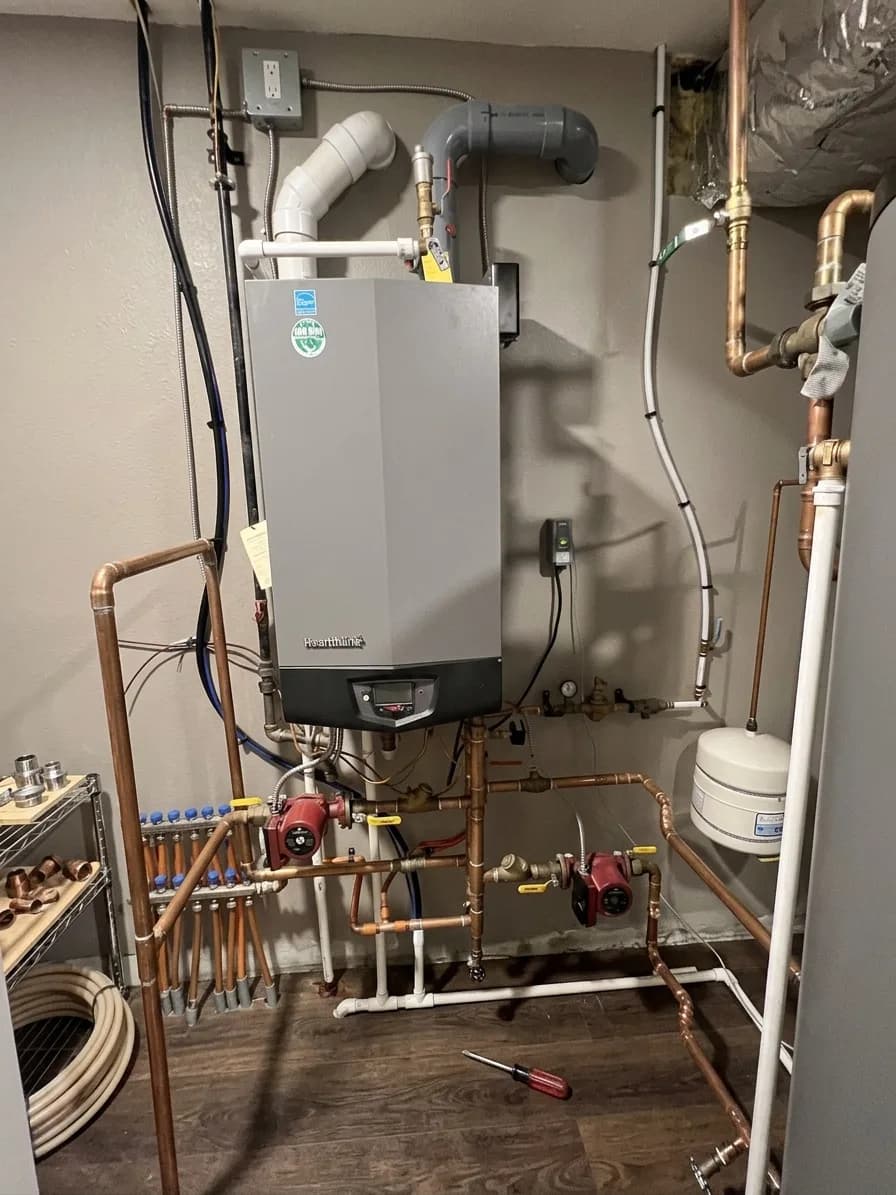
A condensate pump that leaks, hums constantly, or stops running entirely is one of the more common high-efficiency HVAC failures we get called for. Modern high-efficiency furnaces and central AC systems produce a meaningful amount of water during normal operation — typically 2-15 litres per day combined — and that water needs to drain somewhere. When gravity-drain is available the system uses a simple plastic line. When gravity-drain isn't available (basements below grade, ground-level installs with no nearby drain), a condensate pump pushes the water up to a higher drain. Pumps fail. The top six failure modes are clogged trap or inlet, broken float switch, failed motor, leaking reservoir, slime / algae buildup, and frozen line on outdoor-routed setups. This guide walks through diagnosing and fixing each.
If your condensate pump is doing something unusual — leaking water onto the floor, humming without pumping, running constantly, or silent when it should be running — this guide walks through which failure mode matches and which fixes are homeowner-safe versus tech-required.
What a condensate pump does
In normal Oxford County HVAC setups, the high-efficiency furnace produces condensation as combustion gases cool through the secondary heat exchanger. The AC produces condensation as warm humid air cools across the indoor coil. That water collects in a drain pan and needs to leave the equipment area.
Two drainage scenarios:
Gravity drain. The drain pan sits above a floor drain. A clear plastic tube runs from the pan down to the floor drain. Gravity does all the work. Reliable, simple, the default when possible.
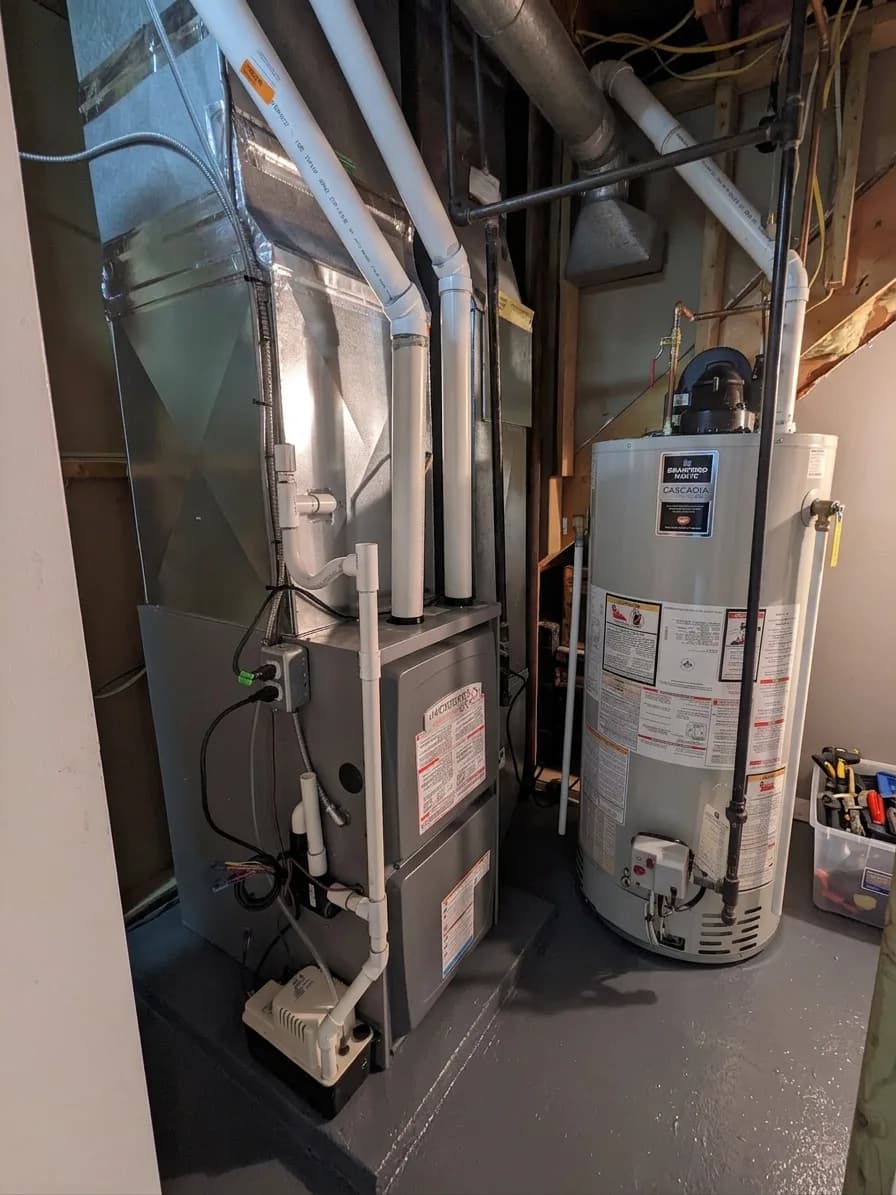
Pump drain. No nearby floor drain or the pan sits below the available drain. A small condensate pump (about the size of a paperback book) sits beside or below the furnace, collects water in its own small reservoir, and uses a float switch to trigger a small motor that pushes the water up through a thin discharge line to a higher drain point — often a laundry sink, an exterior wall, or a sewer cleanout.
The pump is a mechanical device with moving parts and a wet environment. It runs hundreds of times per cooling day in summer and dozens of times per heating day in winter. Failure rates are not zero.
When you need a condensate pump
You need a condensate pump when:
- The furnace or AC is in a basement that sits below the lowest available drain
- The furnace or AC is on a slab without a nearby floor drain
- Gravity drain would require routing the line in a way that creates a long horizontal run with low slope (which would clog)
- The HVAC unit is on a horizontal install where the natural drain point isn't accessible
You don't need one when:
- A floor drain sits within a few feet of the equipment, at a lower elevation
- The drain line can run downhill to a sewer cleanout or sump pit
If you have a condensate pump on a system where gravity drain would have worked, that's an installer choice — usually because routing was easier with a pump than running a longer drain line.
The six common failure modes
1. Clogged trap or inlet
The most common failure. Slime, dust, and small debris accumulate inside the pump reservoir and at the inlet from the drain pan. When the trap or inlet clogs, water backs up in the drain pan, eventually overflows, and you see water around the furnace or AC.
Symptoms:
- Water around the base of the furnace or AC
- Pump reservoir is full of water but pump isn't running
- Pump is running constantly but level isn't dropping
- Slow-developing leak that gets worse over weeks
Fix:
- Turn off power to the pump (unplug or flip the dedicated switch)
- Remove the pump cover
- Empty the reservoir (small wet/dry vac or a turkey baster works)
- Wipe the inside with a cloth + bleach solution (1 part bleach, 10 parts water)
- Check the inlet tube for debris; flush with water
- Reassemble and restore power
Annual cleaning prevents this in most homes. Heavily-loaded systems (high-humidity homes, dusty environments) need more frequent attention.
2. Broken float switch
The float switch is a small plastic float inside the reservoir that rises as water collects. When it hits a trigger height, it closes a circuit that turns on the pump motor. When the float fails (sticky, cracked, broken off), the pump either doesn't run when it should or runs continuously.
Symptoms (depending on failure mode):
- Pump runs but water doesn't pump (motor on, float not signaling pump high enough)
- Pump never runs (float stuck at low position)
- Pump runs constantly (float stuck at high position)
- Pump cycles erratically (float chips or has crack)
Fix:
- Power off the pump
- Open the reservoir
- Lift the float manually — does it move freely?
- Inspect for cracks or sticky residue
- Clean the float and the reservoir
- Test by adding water — does the pump cycle on when the float rises, off when it drops?
If cleaning doesn't resolve it, the float assembly needs replacement. On most pumps the float is part of the entire pump assembly — easier to replace the whole pump ($80-$180 new) than to source an internal float. Tech can swap pumps in 30-45 minutes.
3. Failed motor
The pump motor is the wear part. Small motor, lots of cycles, eventually fails. Typical lifespan 5-10 years depending on duty cycle.
Symptoms:
- Pump hums but no water moves (motor seized or impeller stuck)
- Pump completely silent when float is high (motor failed open)
- Pump runs but with very weak output (motor windings failing)
- Pump runs but excessively loud (bearings worn)
Fix:
- Most pump motors aren't individually replaceable — buy a new pump
- New pump cost: $80-$180
- Tech install: 30-60 minutes including testing
- Total: $200-$400 typically
Replace the entire pump rather than trying to repair the motor. Pump motors are sealed assemblies; you can't economically rebuild them.
4. Leaking reservoir
Older condensate pumps develop hairline cracks in the plastic reservoir, particularly at the corners and around the discharge port. Water seeps slowly out the cracks rather than getting pumped up the discharge line.
Symptoms:
- Constant slow drip from under the pump
- Damp spot or staining on the floor that doesn't go away
- Pump runs normally but you keep seeing water
- Visible crack on reservoir when inspected
Fix:
- Power off the pump
- Inspect all surfaces of the reservoir for cracks
- Small cracks can sometimes be sealed temporarily with epoxy or silicone but it's a band-aid
- Real fix: replace the pump ($80-$180 + install)
- If the discharge line fittings are also leaking, replace those at the same time
5. Slime and algae buildup
This is the chronic version of #1. Biofilm grows in the warm wet environment of the pump reservoir over months. Eventually it clogs the trap, the inlet, and the discharge line. It also smells (musty, sometimes sulfurous).
Symptoms:
- Gradual reduction in pump output
- Musty smell near the equipment
- Visible green or black film inside the reservoir
- Pump runs more frequently as biofilm reduces effective reservoir capacity
Fix (and prevention):
- Full reservoir clean as in #1, with bleach solution
- Drop a condensate pan treatment tablet into the reservoir (sold as "condensate pan tablets" or "biostrips" at HVAC supply shops) — $10-$20 for a pack of 6-12 tablets that last 3-6 months each
- Annual professional cleaning catches it before it's symptomatic
- For chronic biofilm issues, the underlying air quality may have something to address — see our indoor air quality service
6. Frozen discharge line (outdoor-routed systems)
When the pump discharges through an exterior wall to drain outside, the discharge line can freeze in deep cold. Water backs up into the pump, eventually overflows.
Symptoms:
- Pump runs but no water comes out the exterior
- Water around the pump area only in cold weather
- Exterior section of discharge line is ice-clogged or frosty
- Issue only happens below freezing outside
Fix:
- Short-term: thaw the line with warm air (hair dryer if accessible, never an open flame)
- Long-term: reroute the discharge to an interior drain (laundry sink, floor drain, sewer cleanout) instead of exterior
- Insulating the exterior portion sometimes helps but doesn't solve the issue in deep Ontario cold
- If reroute isn't feasible, the discharge can sometimes be heated with a self-regulating heat tape on the exterior portion
Outdoor-routed condensate discharge lines are a chronic problem in Oxford County winters. The reliable fix is interior routing. We won't install exterior-routed condensate lines in new work — the freeze rate is too high.
How to know if you have a condensate pump issue
A few diagnostic checks:
Listen during a furnace or AC cycle.
- The pump should kick on every 5-30 minutes during heavy operation (heating below -5°C or cooling above 25°C)
- You should hear a small motor noise lasting 5-30 seconds, then silence
- If you never hear it, but the system is running heavily, suspect a fail-to-run
- If you hear it constantly, suspect a stuck-on or flooded condition
Look at the pump and surrounding floor.
- Any water on the floor near the pump = there's a problem
- Any condensation staining on the floor near the pump = there's been a problem in the past
- Any musty smell = biofilm growing
Check the reservoir level.
- Power off the pump
- Open the cover (usually a small clip or screw)
- Reservoir should be roughly empty between cycles (small puddle is normal, full reservoir is not)
How urgent is a condensate pump issue?
Low urgency:
- Pump is working but cycles slightly more often than usual (cleaning is in your near future)
- Annual cleaning hasn't happened — schedule it
Medium urgency (book a service call this week):
- Slow leak — you see water occasionally but not constantly
- Pump is louder than usual
- Musty smell from the equipment area
High urgency (today or tomorrow):
- Constant leak — water on the floor that won't stop
- Pump running continuously
- Water dripping from the HVAC equipment itself
Stop and shut off:
- Standing water in the drain pan with the HVAC equipment running
- Water reaching electrical components or the furnace itself
- Pump that's smoking or visibly damaged
If you have standing water in the AC drain pan during cooling season, many systems have a "float switch" that automatically shuts down the AC to prevent damage — see our AC not cooling troubleshooting guide for that specific flow.
Maintenance to prevent failures
A handful of practices keep pumps running:
Quarterly check (5 minutes).
- Power off the pump
- Open the reservoir
- Empty the water, wipe with a damp cloth
- Confirm float moves freely
- Look for cracks or unusual buildup
- Close, restore power
Annual deep clean (15-30 minutes).
- Full bleach-solution scrub of the reservoir
- Inspect inlet and discharge fittings
- Flush the discharge line with water
- Drop a fresh condensate-pan tablet
- Test pump cycle with manual water addition
At every furnace tune-up.
- The tech inspects the condensate pump and traps
- Replaces the float assembly if it shows wear
- Confirms discharge line is flowing freely
- Notes any issues for follow-up
See our pre-winter furnace checklist and spring AC tune-up guide for the broader maintenance context.
When to replace the whole pump
Replace the pump rather than repair when:
- The pump is 7+ years old (typical lifespan reached)
- The motor has failed (not economically rebuildable)
- The reservoir has visible cracks
- The float assembly is broken and not separately replaceable
- The pump is undersized for the equipment (showing as too-frequent cycling)
- The brand has poor parts availability
Typical pump replacement runs $180-$380 in Oxford County in 2026 — new pump ($80-$180), labour for swap and discharge line check (30-60 minutes), and any related discharge line repairs. Comparable cost to a basic repair, and you get a fresh 5-10 year lifespan.
Common questions
How long does a condensate pump last?
Typical 5-10 years. Heavy-duty installations (high-output AC, high-humidity homes) might fail sooner. Light-duty installations might exceed 10 years. The motor and float assembly are the wear parts.
Can I do my own pump replacement?
Maybe. The mechanical swap is straightforward — unplug the old pump, disconnect the inlet and discharge lines, install the new pump in the same position, reconnect lines, plug in. The hard parts are: getting the discharge line height correct (most pumps have a max lift specification), making sure the inlet is below the drain pan outlet so gravity feeds the pump, and confirming the new pump cycles correctly during testing. For straightforward replacements many homeowners can handle it. Anything where the discharge routing needs to change is usually worth a tech.
Why is my condensate pump suddenly noisier?
Three common causes: bearings wearing in the motor (replace pump), debris in the impeller (clean), or the pump is having to lift water higher than spec (check discharge routing). Take a video of the noise and bring it to the tech for diagnosis.
Do all furnaces and ACs need a condensate pump?
No. Only high-efficiency furnaces (95%+ AFUE) produce condensate, and only if the install location can't gravity-drain. AC systems produce condensate but often gravity-drain through the indoor coil's pan to a nearby floor drain. The pump is specifically for situations where gravity drain isn't available.
Can I just use a longer drain line to skip the pump?
If the destination drain is below the source pan, yes — gravity wins. If the destination drain is at or above the source, no — you need a pump.
What's the difference between a condensate pump and a sump pump?
Different scale and purpose. Condensate pumps handle 1-15 litres per day in a small reservoir; sump pumps handle hundreds of litres per day in a deep pit. Sump pumps move groundwater; condensate pumps move HVAC water. You wouldn't use one for the other.
Why does my condensate pump only run in summer?
If you only run AC (no high-efficiency furnace), the pump only sees water in cooling season. If you have both, the pump runs year-round but typically more in summer (AC produces more condensate per hour than a furnace).
Should I install a condensate pump alarm?
For finished basements where a pump leak would cause expensive damage, yes — a $30-$60 water sensor placed beside the pump triggers an alarm before the leak spreads. Many smart-home setups (SimpliSafe, Ring, Nest) include water sensors. Worth the investment for finished basement installs.
Ready for service?
We diagnose and repair condensate pump issues as part of regular service calls and tune-ups. If the pump needs replacement, we'll quote before doing the work and recommend either matching the existing model or upgrading if the original has been a recurring problem.
Request a service call and mention "condensate pump" in the message — we'll prioritize active leaks. Same-day service when scheduling allows. Service area: Woodstock + 30-minute radius covering Ingersoll, Tillsonburg, Tavistock, Norwich, Embro, Innerkip, Thamesford, Beachville, Salford, Mount Elgin, Burgessville, and Plattsville. See furnace repair, AC repair, the furnace not heating checklist, and the AC not cooling troubleshooting guide for related issues.
Common Questions
Frequently asked
Why is my condensate pump leaking?
Six common causes in order of frequency: clogged trap or inlet (cleanable), broken float switch, failed pump motor, leaking reservoir (hairline cracks in older plastic), slime or algae buildup chronically clogging the system, or frozen discharge line on outdoor-routed setups. The first cause is often DIY-fixable; the rest typically need a tech.
How long does a condensate pump last?
Typical 5-10 years. Heavy-duty installations (high-output AC, high-humidity homes) might fail sooner. Light-duty installations might exceed 10 years. The motor and float assembly are the wear parts; the reservoir cracks are usually a function of age and freeze-thaw cycles.
Can I replace a condensate pump myself?
Maybe. The mechanical swap is straightforward — unplug the old pump, disconnect inlet and discharge lines, install the new pump in the same position, reconnect, plug in. Hard parts: getting the discharge line height right (each pump has a max lift spec), confirming the inlet is below the drain pan outlet, and testing pump cycling. Reroutes usually need a tech.
What should I do if my condensate pump is leaking water onto the floor?
Power off the pump (unplug or flip the dedicated switch). Inspect the reservoir for cracks. If cracked, the pump needs replacement. If reservoir is intact but the inlet or discharge is clogged, clean per the maintenance steps. If you're not sure, shut the HVAC off (most modern AC systems have a float switch that does this automatically) and call.
Does my furnace or AC really need a condensate pump?
Only if the equipment can't gravity-drain to a nearby floor drain. Many high-efficiency furnaces and AC systems in Oxford County basements need pumps because the basement floor is below the nearest available drain. If a floor drain is within a few feet at lower elevation, gravity drain is simpler and more reliable.
Why does my condensate pump run all the time?
Stuck float switch (float wedged at high position), failing float that's incorrectly sensing high water, or biofilm buildup keeping the float from dropping. Power off the pump, open the reservoir, and check whether the float moves freely. If clean and free-moving, the float assembly is failing — usually means replacement of the whole pump.